A torn meniscus is a tear in one of the two C-shaped pads of cartilage that cushion your knee. It often causes pain, swelling and stiffness, and the knee may catch, lock or feel like it could give way. Many tears are treated without surgery, using rest, ice and a guided exercise program to restore motion and strength. If you have had surgery, rehab is the next step. OneRehab’s knee physical therapy team helps people with meniscus tears at every stage.
Meniscus tears are extremely common, and with the right diagnosis, treatment and rehab, many people return to the activities they did before the injury.
Below you will find the common symptoms, how tears happen, gentle exercises a therapist may start with and what recovery usually involves.
What is the meniscus?
Each knee has two menisci. They are wedge-shaped pieces of tough, rubbery cartilage that sit between your thighbone (femur) and shinbone (tibia). They act as shock absorbers, help spread your weight across the joint and support knee stability.
- The medial meniscus is on the inside of the knee.
- The lateral meniscus is on the outside of the knee.
How does a meniscus tear happen?
There are two main ways a meniscus tears.
Sudden (acute) tears often happen during sports. A common cause is a quick twist of the knee while your foot stays planted on the ground, such as when pivoting or cutting. If you play sports, our older post on the seven most common sports injuries covers other knee problems too.
Degenerative tears are more common as we age. Cartilage wears over time and tears more easily. In some cases, a simple awkward twist, like getting up from a chair, is enough to cause one.
Torn meniscus symptoms
You might feel a pop when the meniscus tears. Most people can still walk on the injured knee. Over the next 2 to 3 days, the knee often becomes stiffer and more swollen.
Common symptoms include:
- Pain in the knee
- Swelling and stiffness
- Catching or locking, as if something is stuck in the joint
- The knee giving way or feeling unstable
- Trouble moving the knee through its full range of motion
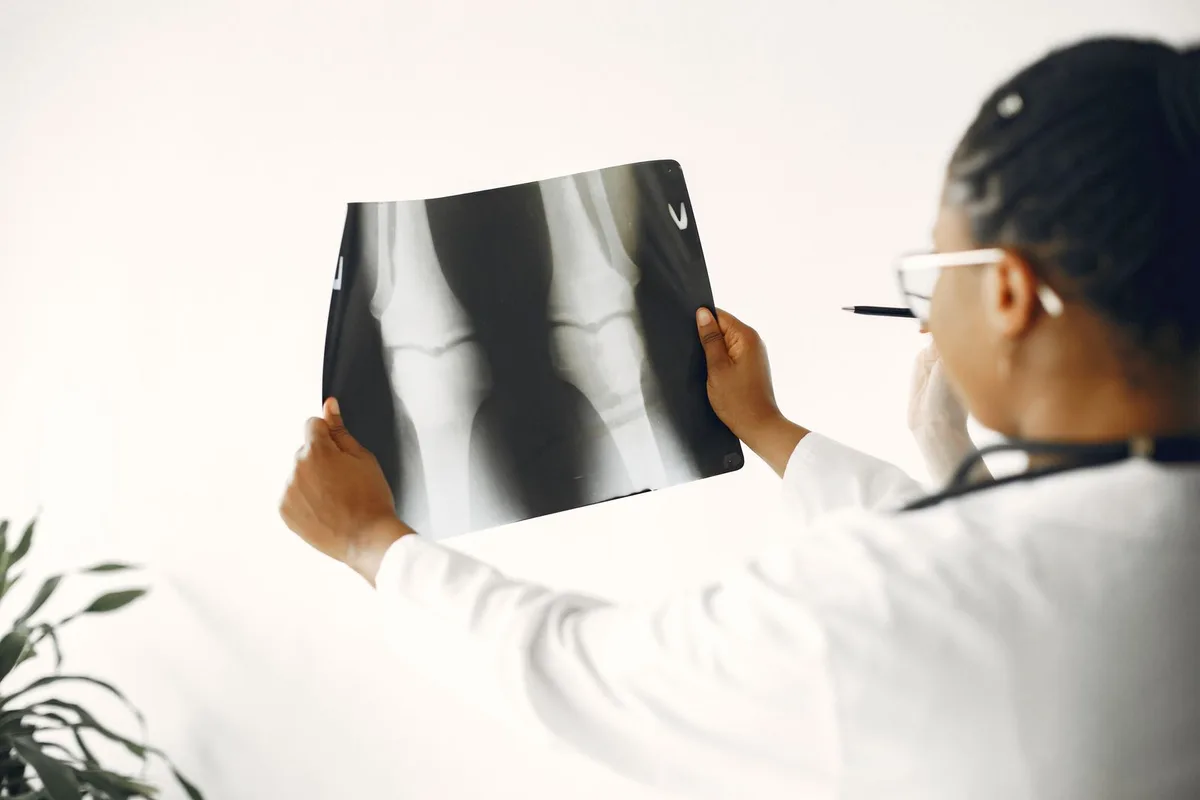
These signs can overlap with other knee injuries, so a doctor should confirm the diagnosis. Your provider will examine the knee, check its motion and may order an X-ray or MRI.
Can a torn meniscus heal without surgery?
Often, yes. Depending on the size and location of the tear, it may heal or settle down without surgery. Degenerative tears without loose fragments can often be treated conservatively.
Early care usually follows the RICE approach:
- Rest: take a break from the activity that caused the injury
- Ice
- Compression
- Elevation
A doctor may also suggest medicine for pain and swelling. Then, regular exercise to restore knee motion and strength is a key part of recovery. A non-surgical physical therapy program usually starts by easing pain and keeping full knee motion, then moves on to strengthening once pain settles and motion returns.
If symptoms continue despite these steps, your doctor may talk with you about surgery. Options include trimming the damaged tissue (partial meniscectomy) or stitching the tear (meniscus repair). That decision belongs to you and your surgeon.
Meniscus tear exercises a therapist may start with
These exercises are often used early in meniscus tear rehab to keep your thigh, hip and calf muscles strong. They are a general guide only. Do them only after your doctor or therapist says it is safe, and only if you feel very little or no pain. Stop if pain sharply increases. A physical therapist should adjust them to your knee.
- Quad set. Sit or lie with your leg straight and a small rolled towel under your knee. Gently press the back of your knee down into the towel to tighten your thigh. Hold about 6 seconds, then relax.
- Straight-leg raise. Lie on your back with the other knee bent. Tighten your thigh, keep the knee straight and lift your heel about 12 inches off the floor. Hold about 6 seconds and lower slowly.
- Hamstring curl. Lie face down with your legs straight. Slowly bend your knee to bring your foot toward your buttock, then lower it. If this hurts, do not bend as far.
- Heel raise. Stand with your feet a few inches apart, holding a counter or chair lightly. Rise up 1 to 2 inches onto your toes, keeping your knees straight. Hold about 6 seconds and lower.
- Bridge. Lie on your back with your knees bent and heels on the floor. Tighten your belly, press your heels down, squeeze your buttocks and lift your hips until your shoulders, hips and knees line up. Hold about 6 seconds and lower. Keep breathing normally.
- Shallow standing knee bend. Stand with your feet shoulder-width apart, holding a counter. Bend your knees a few inches as if starting to sit, then rise slowly. Keep your heels on the floor and do not let your knees go past your toes.
A common starting point is 8 to 12 repetitions of each. Your therapist will tell you when to add resistance, such as an exercise band, and how to progress.
Torn meniscus recovery time
Recovery depends on the type of tear, where it is and how it is treated. Here is a general picture from AAOS OrthoInfo:
| Treatment | Typical rehab time |
|---|---|
| Partial meniscectomy (damaged tissue trimmed) | About 3 to 6 weeks |
| Meniscus repair (tear stitched) | About 3 to 6 months |
Non-surgical recovery varies from person to person. After surgery, your surgeon will set any limits on weight bearing and bending, and your therapist will follow them. You can learn more about rehab after knee surgery on our post-operative physical therapy page. If you also had a ligament injury, our ACL surgery recovery timeline explains that process.
What does physical therapy for a torn meniscus involve?
A physical therapist starts with an evaluation. They look at how your knee bends and straightens, how strong the muscles around your knee and hip are, how much swelling there is and how you walk.
From there, care usually moves through stages:
- Calm things down. Ease pain and swelling and protect the knee.
- Restore motion. Gently work toward full bending and straightening.
- Build strength. Strengthen the thigh, hip and calf muscles that support the knee.
- Return to activity. Build back up to your usual activities, step by step, as your doctor and therapist advise.
When to see a professional
See a doctor if you think you have torn your meniscus, especially after a twisting injury. Contact a medical provider promptly if:
- You cannot bear weight on your knee
- You have severe pain, even at rest
- Your knee locks, buckles or gives way
- You cannot fully bend or straighten your knee
- You have a fever, redness or warmth around the knee, or a lot of swelling
- You have pain, swelling, numbness, tingling or bluish color in the calf below the sore knee
- You still have pain after 3 days of home treatment
A physical therapist can then guide rehab, whether your plan is surgical or not.
How OneRehab can help
OneRehab’s physical therapists evaluate knee motion, strength and walking, then build a rehab plan for meniscus tears, both with and without surgery, through our knee physical therapy program. Active people can also explore our sports medicine care. Visit either clinic in Dallas or Richardson. In Texas, you can see a physical therapist without a referral. To start, book a free screen or schedule an appointment.
Common questions
Can you walk on a torn meniscus?
Most people can still walk on the injured knee. Stiffness and swelling often build over the next 2 to 3 days. If you cannot bear weight, see a doctor.
Does a torn meniscus always need surgery?
No. Many tears, especially degenerative ones without loose pieces, are treated without surgery. Surgery may be considered if symptoms continue after rest, medicine and physical therapy.
What exercises should I avoid with a torn meniscus?
Pain often shows up when you twist, turn or pivot on the knee. Simple walking and other activities without twisting, pivoting or quick changes of direction are generally well tolerated. Ask your doctor or therapist which movements are safe for your tear.
How long does a torn meniscus take to heal?
It depends on the tear and the treatment. Rehab is often about 3 to 6 weeks after a partial meniscectomy and about 3 to 6 months after a repair.
What does a torn meniscus feel like?
Many people feel a pop, then pain, swelling and stiffness. The knee may catch, lock or feel unstable.
Sources
- Meniscus Tears, AAOS OrthoInfo (American Academy of Orthopaedic Surgeons), n.d.: https://www.orthoinfo.org/en/diseases–conditions/meniscus-tears/
- Meniscus Tear, Cleveland Clinic, updated April 5, 2024: https://my.clevelandclinic.org/health/diseases/17219-torn-meniscus
- Meniscus Tear, Hospital for Special Surgery, updated June 17, 2024: https://www.hss.edu/health-library/conditions-and-treatments/list/meniscus-tear
- Meniscus Tear: Rehabilitation Exercises, ColumbiaDoctors (Columbia University Irving Medical Center), current as of June 9, 2026: https://www.columbiadoctors.org/health-library/how-to/meniscus-tear-rehabilitation-exercises/
- Knee pain, MedlinePlus (U.S. National Library of Medicine), reviewed November 7, 2024: https://medlineplus.gov/ency/article/003187.htm