Patellofemoral pain syndrome (PFPS), often called runner’s knee, is pain under or around the kneecap at the front of the knee. It usually comes from doing more activity than the knee is ready for, and it tends to hurt on stairs, when squatting or kneeling, and after sitting a long time with your knees bent. The best-supported treatment is a progressive exercise program for the hip and knee muscles, which a knee physical therapy program can tailor to you.
Runner’s knee is common in active people of all kinds, not only runners. The American Physical Therapy Association’s ChoosePT guide notes that it accounts for about 20% to 25% of reported knee pain and affects more women than men. Most people improve without surgery.
This guide covers the causes, the symptoms, the kinds of exercises therapists use and when to get help.
What is patellofemoral pain syndrome?
The patellofemoral joint is where the back of your kneecap (patella) glides over the groove at the end of your thighbone (femur). AAOS OrthoInfo describes PFPS as a broad term for pain in the front of the knee and around the kneecap. Hospital for Special Surgery notes that it is caused by overuse rather than a single injury.
Patellofemoral pain syndrome symptoms
The main symptom is a dull, aching pain at the front of the knee. It often starts gradually. Common triggers include:
- Going up and especially down stairs
- Squatting, kneeling or lunging
- Sitting for a long time with your knees bent, such as at a desk or in a theater
- Running, especially on hills or uneven ground
- Playing sports
The pain usually comes with activity and eases with rest. HSS notes that it is usually less noticeable when walking on level ground.
What causes runner’s knee?
Several factors can work together:
- Doing too much too soon. ChoosePT explains that research suggests PFP results from activity levels that are increased faster than the knee can adapt.
- Muscle weakness. Weak thigh (quadriceps) and hip muscles can change how load is spread under the kneecap.
- Tight tissues. HSS lists tightness in the IT band and hip flexors among possible contributors.
- How you move. Certain hip and knee movement patterns during running and jumping can add stress.
- Foot posture. Flat feet can play a part.
- Kneecap position. In some people, the kneecap’s alignment or tilt adds stress.
Who gets patellofemoral pain syndrome?
ChoosePT notes that it often occurs among athletes, active teenagers, older adults and people who do physical labor. It is more common in women than in men.
How is runner’s knee diagnosed?
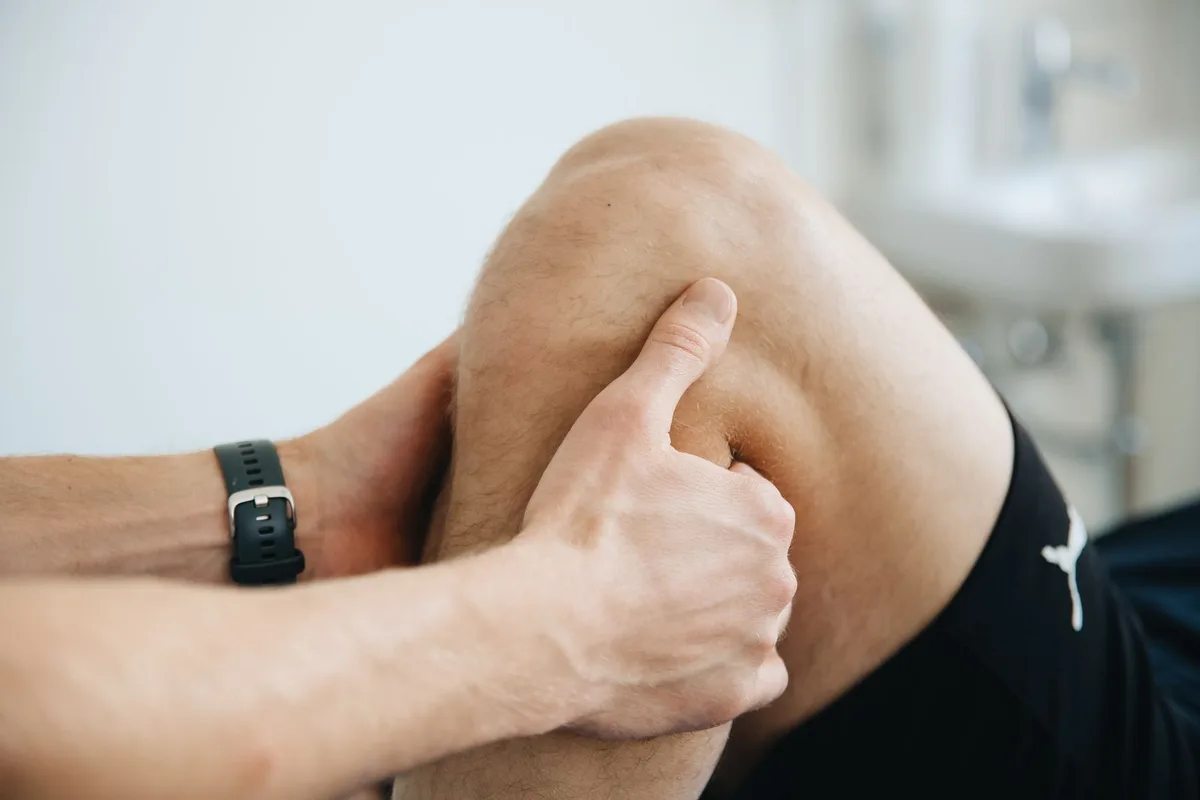
AAOS OrthoInfo notes that a doctor can usually diagnose PFPS with a physical exam. X-rays may be used to rule out damage to the bone, and MRI is sometimes used if symptoms continue after physical therapy. Other knee problems, such as IT band syndrome, can cause pain nearby, so a clear exam helps.
Patellofemoral pain syndrome exercises
Exercise is the core of treatment. ChoosePT states that exercise therapy focused on strengthening the hip and knee is the best approach to managing PFP. AAOS OrthoInfo adds that specific exercises help improve range of motion, strength and endurance.
The examples below come from the AAOS knee conditioning program. A physical therapist will choose which ones fit you, adjust the dose and change them as you improve. Warm up first with 5 to 10 minutes of easy walking or stationary cycling.
- Straight-leg raise. Lie on the floor propped on your elbows, with one leg straight and the other knee bent, foot flat. Tighten the thigh muscle of the straight leg and slowly raise it 6 to 10 inches off the floor. Hold for about 5 seconds, then lower it slowly. Keep your neck and shoulders relaxed.
- Side-lying leg raise (hip abduction). Lie on your side with the bottom knee bent for support. Keep your top leg straight but not locked and slowly raise it, hold briefly, then lower it with control. Do not roll your leg to lift it higher. This works the muscles on the side of your hip.
- Hamstring curl. Stand holding the back of a chair or a wall for balance. Bend one knee and lift your heel toward the ceiling as far as you can without pain. Hold for about 5 seconds, then relax.
- Half squat. Stand with your feet shoulder-width apart, holding a chair or wall for balance if needed. Keep your chest lifted and slowly lower your hips a short way, as if sitting down into a chair, then push through your heels to stand. Do not bend forward at the waist.
OrthoInfo’s guidance is clear: you should not feel pain during an exercise. If an exercise sharply increases your knee pain, stop and ask your physical therapist to adjust it.
What else physical therapy may include
- Activity changes. Cutting back or changing the activities that flare your pain for a while, then building back up gradually.
- Taping. ChoosePT notes taping may help you do exercises with less pain, but taping alone will not resolve PFP.
- Shoe inserts. OrthoInfo notes that shoe inserts can help align and stabilize the foot and ankle.
- Movement training. Working on how you land, squat and run.
- A return-to-activity plan. For runners, this may include a running and motion analysis to look at your stride.
How long does runner’s knee take to get better?
Recovery time varies from person to person. ChoosePT points out that PFP does not go away on its own and that rest helps only temporarily, which is why a steady exercise program matters. Your therapist can help you set realistic expectations based on your evaluation.
How to prevent patellofemoral pain
- Keep your thigh and hip muscles strong.
- Avoid sudden spikes in activity. Build mileage and training gradually.
- Vary your activities. Mix sports instead of repeating the same movements every day.
- Wear appropriate shoes and warm up before exercise.
If you are building up your running, our post on shin splints covers another common injury from increasing training too quickly.
When to see a professional
It is worth an evaluation if knee pain keeps coming back, limits stairs or sitting, or keeps you from your sport. MedlinePlus also suggests contacting your provider if you still have knee pain after 3 days of home treatment.
See a doctor promptly if:
- You cannot bear weight on your knee
- You have severe pain, even when not putting weight on it
- Your knee buckles or locks
- You have a fever, redness or warmth around the knee, or a lot of swelling
- You have pain, swelling, numbness or tingling in the calf below the sore knee
A doctor diagnoses the cause of knee pain. A physical therapist evaluates your strength and movement and builds an exercise plan.
How OneRehab can help
OneRehab’s physical therapists evaluate and treat knee pain, including overuse problems in active adults and teens. Our knee physical therapy uses exercise to restore knee motion and build muscle strength, and our running and motion analysis looks at how your hips, knees and ankles move as you run. You can visit either of our clinics in Dallas or Richardson. In Texas, you can see a physical therapist without a referral. To get started, book a free screen or schedule an appointment.
Common questions
Is runner’s knee the same as patellofemoral pain syndrome?
Yes. AAOS OrthoInfo notes that PFPS is sometimes called runner’s knee.
Will patellofemoral pain go away on its own?
ChoosePT notes that it does not go away on its own and that rest helps only temporarily. A progressive hip and knee exercise program is the best-supported approach.
Why does my knee hurt after sitting?
Sitting for a long time with your knees bent is a common trigger for pain at the front of the knee in PFPS.
Do I need surgery for runner’s knee?
Rarely. AAOS OrthoInfo notes that surgery for patellofemoral pain is very rarely needed and is done only for severe cases that do not respond to nonsurgical care.
Should I stop running?
You may need to cut back or change your training for a while. A physical therapist can help you plan a gradual return.
Sources
- Patellofemoral Pain Syndrome, AAOS OrthoInfo, n.d.: https://www.orthoinfo.org/en/diseases–conditions/patellofemoral-pain-syndrome/
- Knee Conditioning Program, AAOS OrthoInfo, n.d.: https://www.orthoinfo.org/en/recovery/knee-conditioning-program/
- Physical Therapy Guide to Patellofemoral Pain, ChoosePT (American Physical Therapy Association), revised 2019-11-26: https://www.choosept.com/guide/physical-therapy-guide-patellofemoral-pain
- Patellofemoral Pain Syndrome (Runner’s Knee), Hospital for Special Surgery, n.d.: https://www.hss.edu/health-library/conditions-and-treatments/list/patellofemoral-pain-syndrome-runners-knee
- Knee pain, MedlinePlus (U.S. National Library of Medicine), reviewed 2024-11-07: https://medlineplus.gov/ency/article/003187.htm