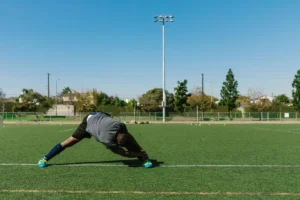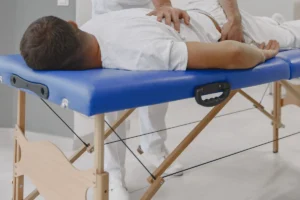

The best spinal stenosis exercises for the lower back are usually gentle moves that bend the spine slightly forward, like knee-to-chest stretches and pelvic tilts, plus core and hip strengthening and regular activity such as walking or a stationary bike. Bending forward takes pressure off the nerves, which is why many people feel better sitting or leaning on a shopping cart. A physical therapist at OneRehab’s neck and spine therapy service can check which moves suit your back and how far to push them.
Spinal stenosis becomes more likely as people get older. There is no cure for spinal stenosis, but exercise is one of the most important treatments. It can help you move more comfortably and keep doing the things you enjoy.
This guide explains what spinal stenosis is, gentle exercises to try, how to keep walking, and when to see a professional.
What is spinal stenosis?
Spinal stenosis happens when the spaces in the spine narrow and press on the spinal cord and nerve roots. Anyone can get it, but the chance increases with age. In the lower back (lumbar spinal stenosis), it is most common in adults over 60. Aging changes in the spine and arthritis are the most common causes.
In the lower back, it can cause:
- A burning pain or ache in the low back and buttocks that spreads into the legs
- Numbness, tingling, cramping or weakness in the legs
- Leg pain or heaviness that comes on when you stand or walk
When stenosis is in the neck, symptoms are more often numbness or tingling in the arms and hands. This post focuses on the lower back.
Why does bending forward feel better?
Many people with lumbar stenosis notice a pattern. Standing up straight or walking usually makes the pain worse. Sitting down or leaning forward makes it feel better. This leg pain with walking is sometimes called neurogenic claudication.
Flexing the spine (bending forward) takes pressure off the nerves. That is why many spinal stenosis exercises use a gentle forward bend, and why some people can ride a stationary bike or walk while leaning on a shopping cart without much pain.
Spinal stenosis exercises to try
These moves come from NHS physiotherapy guides for lumbar stenosis. Go slowly, breathe normally, and stay within a comfortable range. Mild stretching is fine. Stop if pain, numbness or tingling sharply increases, and ask your therapist to adjust the plan.
- Knees to chest. Lie on your back with your knees bent. Gently pull both knees toward your chest. Hold for about 10 seconds, then lower. One guide suggests repeating this 10 times, 3 times a day. If both knees is too much, bring one knee up at a time.
- Pelvic tilt (lying). Lie on your back with your knees bent. Tighten your stomach muscles to gently flatten your lower back into the floor. Hold for about 5 seconds and relax. Repeat about 5 times.
- Pelvic tilt (sitting). Sit tall on a firm chair. Tilt your pelvis forward to arch your lower back a little, then roll it back as if tucking your tailbone under. Keep your shoulders still. Repeat about 10 times.
- Knee rolls. Lie on your back with your knees bent and together. Gently let them roll to one side, hold for about 10 seconds, then roll to the other side. Do about 3 on each side.
- Seated forward bend. Sitting in a chair, slowly bend forward and let your back round, breathing slowly. Push through your legs to come back up. Repeat 5 to 10 times.
- Sit to stand. Sit in a sturdy chair. Stand up and sit down slowly, trying not to use your hands. This builds leg strength for walking and stairs.
- Hip strengtheners. Standing and holding a counter, move one straight leg slowly back, then out to the side. Repeat about 10 times on each leg. Strong hip and leg muscles support walking.
Your therapist may also add core work. Strong stomach and back muscles help support the spine.
How to keep walking with spinal stenosis
Walking can feel hard with stenosis, but staying active matters. NHS physiotherapy guidance says it is safe to keep walking with leg pain as long as your symptoms stay at an acceptable level. Walking up to the point where symptoms start, and then just a little further, often improves walking distance over time.
Other tips:
- Pace yourself. Break your day into chunks of activity and rest. Try not to overdo it on good days or stop moving on bad ones.
- Try a bike or the pool. A stationary bike lets you exercise in a forward-leaning position. Swimming is another option.
- Lean when you need to. Resting on a cart, walker or counter can ease symptoms. Using a walking aid can also help with stability.
- Aim for regular exercise. The National Institutes of Health suggests aiming for at least 30 minutes, three times a week, and talking to your doctor before starting a new program.
Leg pain with walking can also come from other causes, such as poor circulation, so it’s important to have it assessed by a health professional.
How does physical therapy help spinal stenosis?
Physical therapy is a common first treatment. A physical therapist can:
- Teach specific movements to take pressure off the nerves
- Build strength in your trunk, hips and legs
- Keep your spine moving and build endurance for walking
- Show you how to stand, walk and sit in ways that ease symptoms
- Use hands-on techniques, such as massage, to help stiff joints move
- Help you plan regular activity that fits your symptoms, such as cycling
If you also have pain shooting down one leg, our posts on sciatica exercises and lower back pain exercises cover related problems.
When to see a professional
It’s worth getting an evaluation if back or leg symptoms keep limiting how far you can walk or stand, or if they aren’t improving with gentle activity. See a doctor promptly if:
- Numbness or weakness in your legs is getting in the way of walking
- You have new weakness or reduced feeling in your legs
Get emergency care right away if you can’t pass urine, lose control of your bladder or bowels, or lose feeling in your genital or groin area. These can be signs of a rare problem called cauda equina syndrome, which needs prompt treatment.
A doctor diagnoses spinal stenosis and decides on imaging, injections or surgery. A physical therapist can evaluate how you move and guide an exercise plan.
How OneRehab can help
OneRehab’s physical therapists treat back and neck conditions through our neck and spine therapy service, using stretching, stabilization and core strengthening exercises, manual therapy and self-management techniques. You can visit either clinic: Dallas or Richardson. To get started, book a free screen or schedule an appointment. In Texas, you can also see a physical therapist without a referral.
Common questions
What exercises should I avoid with spinal stenosis?
Standing up straight tends to make symptoms worse, while bending forward tends to ease them, so your therapist may limit moves that arch your lower back. Ask which moves to limit for your back.
Is walking good for spinal stenosis?
Yes, for most people. It’s generally safe to keep walking as long as symptoms stay acceptable, and walking a little past the point where symptoms start often improves distance over time.
Is a stationary bike good for spinal stenosis?
Many people find it easier than walking, because it keeps the spine slightly bent forward. Bicycling may be a better way to stay active if walking is painful.
Can spinal stenosis exercises fix the narrowing?
There is no cure for spinal stenosis, but stretching, massage and core strengthening often help manage symptoms.
How often should I exercise?
NIH guidance suggests aiming for at least 30 minutes, three times a week. Talk to your doctor before starting, and let your therapist set the right amount.
Sources
- Spinal Stenosis, National Institute of Arthritis and Musculoskeletal and Skin Diseases (NIH), last reviewed November 2023: https://www.niams.nih.gov/health-topics/spinal-stenosis
- Spinal Stenosis: Diagnosis, Treatment, and Steps to Take, National Institute of Arthritis and Musculoskeletal and Skin Diseases (NIH), last reviewed November 2023: https://www.niams.nih.gov/health-topics/spinal-stenosis/diagnosis-treatment-and-steps-to-take
- Lumbar Spinal Stenosis, American Academy of Orthopaedic Surgeons (OrthoInfo), n.d. (reviewer disclosures dated 2025): https://www.orthoinfo.org/en/diseases–conditions/lumbar-spinal-stenosis/
- Physical Therapy Guide to Spinal Stenosis, American Physical Therapy Association (ChoosePT), revised 2018-01-07: https://www.choosept.com/guide/physical-therapy-guide-spinal-stenosis
- Spinal stenosis, Leeds Community Healthcare NHS Trust, n.d.: https://leedscommunityhealthcare.nhs.uk/our-services-a-z/musculoskeletal-msk/back-problems/known-and-diagnosed-back-problems/spinal-stenosis/
- Leg pain (lumbar spinal stenosis), MSK Dorset (NHS), n.d.: https://www.mskdorset.nhs.uk/back-pain_1/back-pain-leg-pain-spinal-stenosis/