De Quervain’s tenosynovitis is a painful condition that happens when the tendons that move your thumb become irritated where they pass the thumb side of your wrist. The main symptom is pain on the thumb side of the wrist, often worse when you grip, pinch or twist. It is very treatable and is usually a short-term problem. Rest, a splint and guided exercises help most people, and OneRehab’s hand and wrist therapy team can check your wrist and build a plan that fits your day.
This guide explains what De Quervain’s is, who tends to get it, how it is diagnosed and treated, and when it’s worth seeing a professional.
What is De Quervain’s tenosynovitis?
Two tendons run along the thumb side of your wrist. One helps move your thumb away from your hand. The other helps straighten your thumb. Both pass through a narrow tunnel called a sheath.
In De Quervain’s, these tendons and their sheath become irritated and swollen. The tendons then rub as they move, which causes pain at the base of the thumb and wrist. You may also hear it called De Quervain’s tendinosis or tendinitis.
De Quervain’s tenosynovitis symptoms
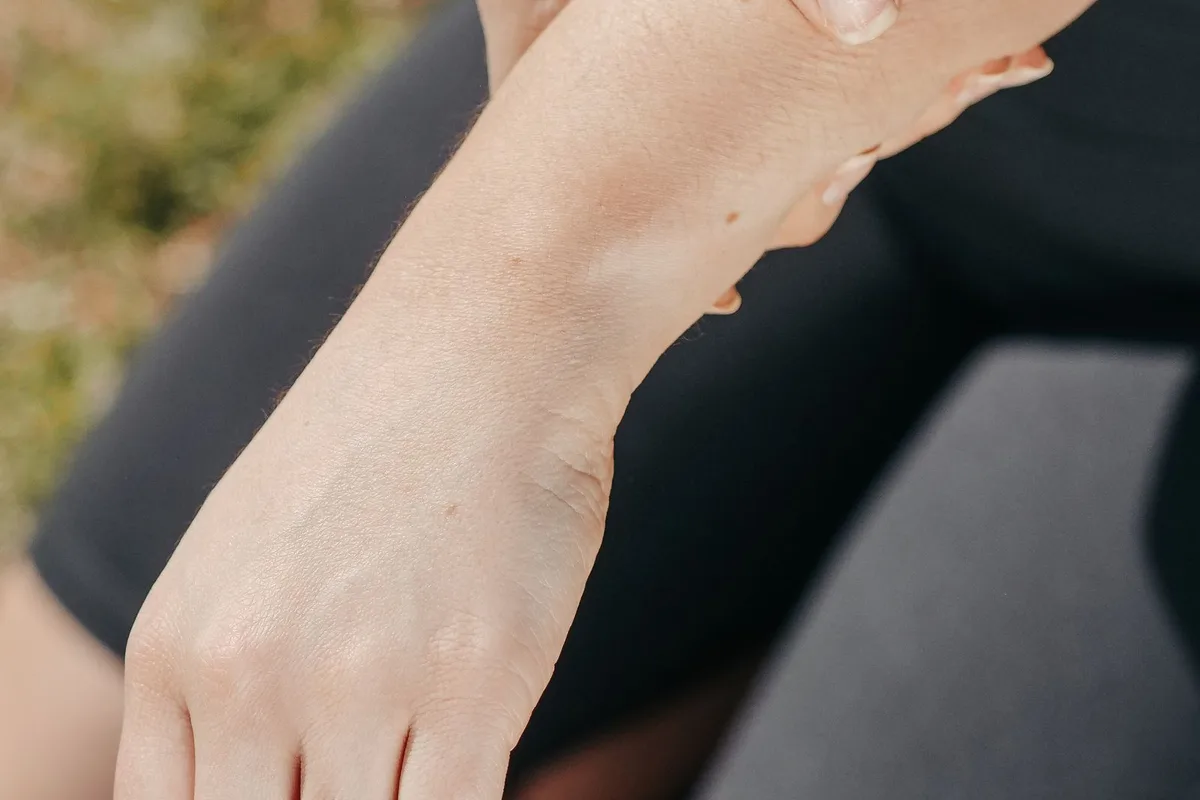
The most common symptom is pain in your wrist on the same side as your thumb. Other signs can include:
- Pain that gets worse when you grip, pinch or twist
- Swelling near the base of the thumb
- A catching, snapping or popping feeling when you move your thumb
- Stiffness, or trouble moving your thumb and wrist
- Numbness in some cases
Who gets De Quervain’s?
Anyone can get it, but some groups get it more often:
- Women. It affects more women than men.
- Adults over 40. It is most common in people in their 40s and 50s.
- New parents. It is linked to pregnancy and the months after birth. People who develop it after having a baby often notice it within 4 to 6 weeks. Lifting and holding a baby puts the wrist in awkward positions again and again.
- People with rheumatoid arthritis. They may be more likely to develop it.
The exact cause isn’t fully understood. Repeated strain from awkward wrist and thumb positions is a common trigger. Everyday examples include texting, knitting, golf, repetitive gripping at work and lifting young children. A direct blow to the thumb or wrist can also set it off.
How is De Quervain’s diagnosed?
A doctor usually diagnoses it with a hands-on exam. A common check is the Finkelstein test. You tuck your thumb into your palm, wrap your fingers over it, and then bend your wrist toward your little finger. Pain on the thumb side during this move suggests De Quervain’s.
Your doctor may order an X-ray to check for other causes of wrist pain. If your hand also feels numb or tingly, or the pain is in a different spot, mention it. Other conditions, such as carpal tunnel syndrome, can cause those symptoms.
De Quervain’s tenosynovitis treatment
Most people start with simple, nonsurgical care. Many people’s symptoms settle with rest and the right changes to activity.
Rest and activity changes
Avoiding the movements that cause pain and swelling gives the tendons a chance to calm down. Side-to-side wrist motion usually causes the most pain, so it helps to limit it while you heal.
A thumb splint
A splint that keeps the wrist straight and the thumb still is a common treatment. Most people wear one for a few weeks. Some hand therapy services in the UK use a trial of about six weeks of full-time splinting, then wean off it over a few more weeks. Your doctor or therapist will tell you how long to wear yours.
Medicine and injections
Your doctor may talk with you about medicines for pain and swelling. If symptoms don’t settle, a corticosteroid injection into the tendon sheath is a common next step. Ask your doctor about the options that suit you.
Surgery
Most people don’t need surgery. If symptoms are severe or don’t improve after about 6 weeks of nonsurgical care, a surgeon may suggest releasing the tendon sheath to give the tendons more room.
Exercises for De Quervain’s tenosynovitis
Exercise has a place, but timing matters. Early on, the goal is to calm the tendons, so a therapist may only have you do gentle wrist movements while you’re out of the splint. One NHS leaflet suggests taking the splint off at least five times a day for gentle wrist movements, about 10 repetitions each, while avoiding side-to-side wrist motion.
Once your symptoms ease, your therapist may add stretches and exercises that build wrist and thumb strength and flexibility. Hand therapy teams often wait until after the splinting period, once symptoms have clearly improved, before moving on to this stage.
A few general tips:
- Keep movements slow and within a comfortable range.
- Skip any move that brings back sharp pain at the base of your thumb.
- Stop if pain sharply increases, and ask your therapist to adjust the plan.
Because exercises need to match your stage of healing, it’s best to have a therapist tailor them.
Easing strain at home and work
Small changes can reduce the load on your thumb tendons:
- Notice your triggers. Texting, knitting, golf, gripping tools and lifting children are common ones.
- Keep the wrist straighter. Try to limit bending the wrist side to side during tasks.
- Take breaks. Spread out repetitive gripping and pinching through the day.
New parents may find it helps to ask a therapist to look at how they lift and hold their baby. If you are recovering from pregnancy in other ways too, our postpartum pelvic floor rehab page explains another kind of support.
If you also have a finger that catches or locks, our post on trigger finger exercises covers that related tendon problem.
When to see a professional
See a healthcare provider as soon as you notice pain or other symptoms of De Quervain’s. It’s especially worth getting checked if:
- Pain at the base of your thumb makes gripping, pinching or lifting hard
- You notice swelling, catching or snapping at the thumb side of the wrist
- Your symptoms haven’t settled after a few weeks of rest and activity changes
A doctor diagnoses De Quervain’s and decides on injections or surgery. A physical or occupational therapist can evaluate your hand and wrist, fit your daily tasks around healing, and guide your exercises.
How OneRehab can help
OneRehab’s hand and wrist therapy team treats De Quervain’s tenosynovitis, building a plan to improve strength in the hand, wrist and thumb, including after surgery. Our occupational therapy team can help with the everyday tasks that flare it up. Visit either clinic: Dallas or Richardson. To get started, book a free screen or schedule an appointment. In Texas, you can also see a physical therapist without a referral.
Common questions
How long does De Quervain’s take to heal?
It usually takes a few weeks for the tendons to heal after diagnosis. Most people wear a splint for a few weeks, and most do very well.
Why is it sometimes called “mommy thumb”?
It is linked to pregnancy and the months after birth, and lifting and holding a baby is a common trigger. Anyone can get it, though.
What is the Finkelstein test?
You tuck your thumb into your palm, wrap your fingers over it and bend your wrist toward your little finger. Pain on the thumb side suggests De Quervain’s, and a doctor confirms the diagnosis.
Can I keep using my hand?
Yes, but limit the movements that cause pain, such as side-to-side wrist bending. You can usually go back to normal hand use once comfort and strength return.
Will I need surgery?
Most people don’t. Surgery may be an option if symptoms are severe or don’t improve after about 6 weeks of nonsurgical treatment.
Sources
- De Quervain’s Tendinosis, American Academy of Orthopaedic Surgeons (OrthoInfo), n.d. (contributor disclosures dated 2025): https://www.orthoinfo.org/en/diseases–conditions/de-quervains-tendinosis/
- De Quervain’s Tenosynovitis, Cleveland Clinic, last updated 2023-06-14: https://my.clevelandclinic.org/health/diseases/10915-de-quervains-tendinosis
- De Quervain’s Tenosynovitis: Chronic Wrist Pain, Hospital for Special Surgery, n.d.: https://www.hss.edu/health-library/conditions-and-treatments/list/de-quervains-tenosynovitis
- De Quervain’s Tenosynovitis, Dorset County Hospital NHS Foundation Trust, approved April 2025: https://dchft.nhs.uk/leaflets/de-quervains-tenosynovitis/
- Hand Therapy – De Quervain’s Tenosynovitis, North Tees and Hartlepool NHS Foundation Trust, page reviewed 2026-03-31: https://www.nth.nhs.uk/resources/hand-therapy-de-quervains-tenosynovitis-inflammation-of-the-tendons-of-the-thumb/