
A hip flexor strain happens when one or more of the muscles at the front of your hip is stretched or torn. You usually feel pain and pulling where your thigh meets your hip, often after sprinting, kicking or a sudden movement. Most mild strains feel better within a week or two with rest, ice and gentle movement. More serious strains take longer. If pain lingers or limits how you walk, OneRehab’s hip injury therapy team can evaluate it and guide your rehab.
Many hip flexor strains heal well at home. The key is to rest at first, bring back movement gently, and avoid rushing back to hard training. This guide covers the symptoms, the three grades of strain, typical recovery times and when it makes sense to see a professional.
What are the hip flexors?
Your hip flexors are a group of muscles along the front of your upper thigh. They bend (flex) and steady your hip, the motion you use to bring your thigh forward. According to Hospital for Special Surgery (HSS), they include the iliacus, psoas major, rectus femoris and sartorius. The iliacus and psoas major are the main hip flexors. The rectus femoris also helps straighten the knee.
Hip flexor strain symptoms
Cleveland Clinic lists these common symptoms of a hip flexor strain:
- Pain at the front of the hip
- A feeling of tightness or pulling in the hip
- Trouble walking or moving without limping
- Weakness in the lower abdomen or hip
- Bruising or discoloration
- Swelling
- Muscle spasms
MedlinePlus notes that a mild strain often causes mild pain and pulling at the front of the hip. Severe pain, spasms, bruising and swelling can be signs of a complete tear, which is less common.
What causes a pulled hip flexor?
Hip flexor strains are common in athletes and active people, but they can happen to anyone. Common causes include:
- Sudden movements such as sprinting or kicking
- Overuse, from repeating the same motion at work or in sports
- Skipping a warm-up before exercise
- Tight muscles, which are more likely to strain
- Falls or accidents, especially if you suddenly tense up to brace for impact
Mayo Clinic adds that muscle tightness, muscle imbalances and poor conditioning can raise the risk of hip and thigh strains. A past strain in the same area can also raise the chance of injuring it again.
Grades of hip flexor strain
Muscle strains are graded by how much of the muscle is damaged. Cleveland Clinic describes them this way:
| Grade | What it means | Typical healing time |
|---|---|---|
| Grade 1 (mild) | Muscle is stretched with minor damage, not torn through | Within a few weeks |
| Grade 2 (moderate) | Some or even most of the muscle is torn | Several weeks to months |
| Grade 3 (severe) | Muscle is torn all the way through | May need surgery; four to six months after surgery |
A physical exam by a healthcare provider confirms the diagnosis and the grade.
Hip flexor strain recovery time
For most people, recovery time depends on the grade. Cleveland Clinic says that depending on how severe the strain is, you should feel better in a week or two. Moderate strains can take several weeks to months to heal completely. Severe tears are uncommon and may need surgery.
While you heal, avoid running, intense workouts and sports. Cleveland Clinic warns that going back too soon raises the chance of re-injury and can make the strain worse than the first time. MedlinePlus suggests exercise that doesn’t strain the hip flexors, such as swimming, if your provider agrees.
How to treat a hip flexor strain at home
Most hip flexor strains can be treated at home. MedlinePlus suggests:
- Rest. Stop any activity that causes pain.
- Ice. Ice the area for 20 minutes every 3 to 4 hours for the first 2 to 3 days. Don’t put ice directly on your skin.
- Gentle movement. Cleveland Clinic notes that reintroducing gentle movement after the first few days of recovery is important.
- Gentle stretching. MedlinePlus says gentle stretching to extend your hip can help with recovery.
Stop any exercise that sharply increases your pain. A therapist can tell you which movements suit your stage of healing.
Gentle hip flexor stretches
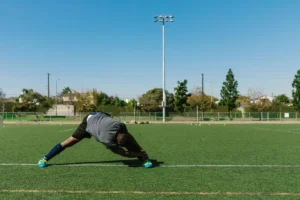
Once early pain settles and your provider or therapist says you are ready, gentle stretches can help. HSS describes a half-kneeling hip flexor stretch:
- Kneel on your left knee with your right foot in front, so your right thigh is parallel to the floor.
- Keep your back straight.
- Shift your weight forward until you feel a stretch in the front of your left thigh and groin.
- Hold for about 30 seconds, then switch sides.
HSS also describes a supine version. Lie on your back near the edge of your bed and let one leg hang off the side while keeping your back flat. Keep any stretch mild. A stretch should feel like a gentle pull, not pain.
How does physical therapy help a hip flexor strain?
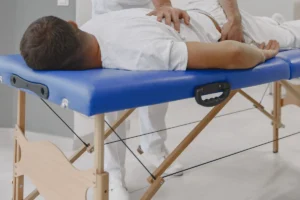
For moderate or severe strains, or pain that keeps coming back, a physical therapist can help. MedlinePlus notes that a physical therapist can help you stretch and strengthen your hip flexors and the muscles that support the area, and guide you in increasing your activity level so you can return to your activities.
A therapist will usually:
- Check your hip motion, strength and how you walk
- Look at the hip, lower back and nearby areas that can play a part in hip pain
- Build a plan that moves from gentle motion to strengthening to sport-specific work
- Help you decide when you are ready to run, kick or train hard again
Athletes may also benefit from sports medicine physical therapy, which focuses on safe return to training. If you’ve had a hamstring strain before, you’ll notice the same general idea: heal first, then rebuild strength before full speed.
How can you prevent a hip flexor strain?
Cleveland Clinic says the best way to prevent hip flexor strains is to stretch and warm up before exercising. Other helpful habits:
- Stay well conditioned and work on tight or unbalanced muscles, since Mayo Clinic lists these as risk factors
- Take breaks from long periods of sitting, which HSS notes can shorten and tighten the hip flexors
- Give a past strain time to heal fully before returning to full activity
When to see a professional
Most hip flexor strains improve with home care. MedlinePlus advises contacting your provider if you do not feel better in a few weeks with treatment. Cleveland Clinic advises seeing a provider right away for severe symptoms like intense pain.
Go to the emergency room if you have:
- Bleeding in or around the strained muscle
- An inability to move your leg
- Swelling that won’t go away or is getting worse
- Hip pain after a fall, car accident or other trauma
A physician can diagnose the strain and rule out other causes of hip pain. A physical therapist can then evaluate your movement and guide your rehab.
How OneRehab can help
OneRehab’s physical therapists evaluate and treat hip pain, including hip flexor strains, with a plan built around your goals, whether that is walking without a limp or getting back to your sport. Learn more on our hip injury therapy page. We see patients at our Dallas and Richardson clinics. Book a free screen with a licensed physical therapist or certified athletic trainer, or schedule an appointment. In Texas you can see a physical therapist without a referral.
Common questions
How long does a hip flexor strain take to heal?
Cleveland Clinic says you should feel better in a week or two, depending on how severe the strain is. Moderate strains can take several weeks to months, and severe tears take longer.
Can I walk with a hip flexor strain?
Many people can walk, though it may hurt or cause a limp. Rest from activities that cause pain, and see a provider if you can’t move your leg.
Should I stretch a pulled hip flexor?
Gentle stretching to extend the hip can help recovery, according to MedlinePlus. Start only after the first painful days and keep it mild.
Is heat or ice better for a hip flexor strain?
MedlinePlus recommends ice for 20 minutes every 3 to 4 hours for the first 2 to 3 days. Don’t put ice directly on your skin.
When can I run again after a hip flexor strain?
Wait until the muscle has healed. Cleveland Clinic warns that returning too early raises the chance of re-injury. A physical therapist can help you judge when you’re ready.
Sources
- Hip Flexor Strain, Cleveland Clinic, updated August 3, 2022: https://my.clevelandclinic.org/health/diseases/23978-hip-flexor-strain
- Hip flexor strain – aftercare, MedlinePlus (National Library of Medicine), reviewed June 4, 2025: https://medlineplus.gov/ency/patientinstructions/000682.htm
- Muscle Strains, Cleveland Clinic, updated February 18, 2025: https://my.clevelandclinic.org/health/diseases/22336-muscle-strains
- Four Hip Flexor Stretches to Relieve Tightness, from a PT, Hospital for Special Surgery, published February 21, 2022: https://www.hss.edu/health-library/move-better/hip-flexor-stretch
- Muscle strains (IT band, groin, hip flexor), Mayo Clinic Orthopedics & Sports Medicine, n.d.: https://sportsmedicine.mayoclinic.org/condition/muscle-strains/