
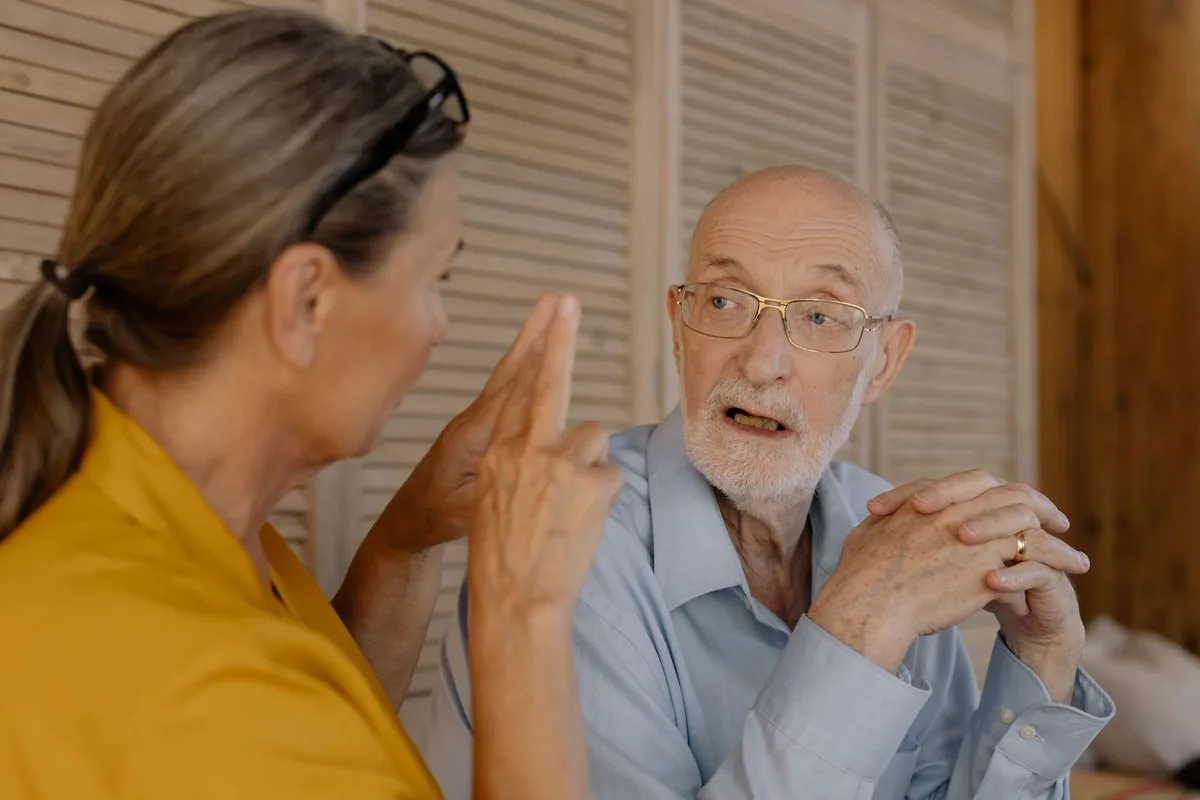
The difference between dysarthria vs aphasia comes down to muscles versus language. Dysarthria is a motor speech disorder: the muscles used for speaking are weak or hard to control, so speech may sound slurred, slow or quiet, but the person understands language. Aphasia is a language disorder: finding words, understanding others, reading and writing can all be affected. Both can happen after a stroke, sometimes together. A speech-language pathologist can tell which is present, and OneRehab’s aphasia treatment and speech therapy cover both.
Knowing the difference helps families talk with their loved one in a way that works, and helps everyone understand what therapy will focus on.
What is dysarthria?
Cleveland Clinic describes dysarthria as a motor speech disorder. Damage to the nervous system weakens or paralyzes the muscles used for speaking, which can make it hard to control the tongue or voice box.
Signs of dysarthria can include:
- Slurred speech or mumbling
- Speaking faster or slower than intended
- A voice that sounds hoarse, breathy, strained, nasal or flat
- Speech that is too quiet or too loud
- Choppy speech with frequent pauses
The key point is that the problem is physical. People with dysarthria understand language and know what they want to say. Because the same muscles help with eating, the lack of muscle control can also make swallowing difficult.
What is aphasia?
Aphasia is a language disorder. The National Institute on Deafness and Other Communication Disorders (NIDCD) explains that it results from damage, usually from a stroke or traumatic brain injury, to areas of the brain that handle language. It affects how a person expresses and understands language, as well as reading and writing.
NIDCD describes several types. People with Broca’s aphasia often speak in short phrases that take great effort. People with Wernicke’s aphasia may speak in long sentences that have little meaning and may not notice their errors. Global aphasia causes severe difficulty with both speaking and understanding.
Stroke is the leading cause of aphasia, and NIDCD cites an estimate that about 2 million people in the United States live with it.
Dysarthria vs aphasia: the key differences
| Dysarthria | Aphasia | |
|---|---|---|
| What is affected | Muscles used for speech | Language: words, grammar, meaning |
| How speech sounds | Slurred, slow, quiet or uneven | May be halting or fluent but hard to follow |
| Understanding others | Usually not affected | Often affected |
| Reading and writing | Not the main problem | Often affected |
| Therapy focus | Breath, loudness, rate, clearer speech | Word-finding, understanding, reading, writing |
A simple way to think about it: with dysarthria, the message is clear in the person’s mind but hard to get out physically. With aphasia, the link between thoughts and words is what was injured.
Can someone have both after a stroke?
Yes. NIDCD notes that aphasia may occur along with speech disorders such as dysarthria or apraxia of speech.
That is one reason a full evaluation matters. Two people can both “have trouble talking” after a stroke and need very different therapy. A speech-language pathologist sorts out which parts of communication are affected and how much.
What causes dysarthria and aphasia?
Both can follow a stroke, but the causes overlap only in part.
- Dysarthria: Damage to the brain areas and nerves that control the speech muscles. Cleveland Clinic lists stroke along with Parkinson’s disease, multiple sclerosis, ALS, brain tumors, traumatic brain injury and certain medications.
- Aphasia: Damage to the language areas of the brain, mostly on the left side. Besides stroke, it can follow a head injury, brain tumor, brain infection or brain surgery.
Your doctor works out the cause. If you are living with Parkinson’s disease, our post on the stages of Parkinson’s disease explains how symptoms can change over time.
How speech therapy helps each one
Therapy for dysarthria
A speech-language pathologist may first evaluate how severe the dysarthria is. Therapy then depends on the type and how much it affects daily life. According to the American Speech-Language-Hearing Association’s public resource, therapy can work on speech rate, loudness and breath support. Cleveland Clinic adds that an SLP can teach exercises to strengthen the speech muscles and strategies for speaking more clearly, and can show family members how to help.
When speech is very hard to understand, other tools can fill the gap, such as letter or picture boards or a communication device.
Therapy for aphasia
NIDCD says speech-language therapy helps people with aphasia regain and improve their ability to communicate. Therapy often includes word-finding practice, work on understanding conversation, reading and writing for daily life, and other ways to get a message across, like gestures or drawing. Our aphasia treatment page describes this in more detail.
If swallowing is also hard, mention it at your first visit. Our guide to swallowing problems after a stroke explains how that is tested and treated.
Will speech improve after a stroke?
Many people do improve. NIDCD notes that people with aphasia can often see large gains in the first few months, and that language and communication can keep improving for many years after a brain injury.
For dysarthria, the outlook depends on the cause. Cleveland Clinic notes that dysarthria after a stroke may not go away completely, but you can still improve your communication through speech therapy. Nobody can promise a full recovery, and your SLP can give you an honest picture after the evaluation. For a broader view of how rehab unfolds, see our stroke recovery timeline.
Tips for talking with someone who has dysarthria or aphasia
Small changes from listeners make conversations easier.
If your loved one has dysarthria:
- Be honest. If you don’t understand, say so instead of pretending.
- Repeat back the part you did understand.
- Ask yes-or-no questions when a reply is hard to make out.
- Encourage rest before and after long conversations.
If your loved one has aphasia:
- Use short, simple sentences.
- Reduce background noise, such as a loud TV or radio.
- Give plenty of time to respond, and avoid correcting their speech.
- Accept any form of communication, including gestures, pointing or drawing.
- Keep including them in conversations and ask their opinion.
People with dysarthria may also find it helps to let others know they have trouble with speech before starting a conversation, and to pause often.
When to see a professional
It is worth asking for a speech-language evaluation if you or a loved one:
- Still has trouble speaking clearly or finding words after leaving the hospital or inpatient rehab
- Has trouble following conversations, reading or writing
- Avoids talking because it feels tiring or frustrating
- Coughs or chokes when eating or drinking
The CDC lists sudden confusion, trouble speaking or difficulty understanding speech among the warning signs of a stroke. If that happens, call 911 right away. Doctors diagnose the cause of speech and language problems; a speech-language pathologist evaluates communication and treats it.
How OneRehab can help
OneRehab’s speech-language pathologists evaluate and treat both aphasia and other speech and language problems after a stroke, including help with swallowing. Physical and occupational therapists work in the same clinic, so speech therapy can fit with the rest of your stroke therapy. We see patients at both clinics, in Dallas and Richardson. To start, schedule an appointment. For questions about walking, balance or pain, you can also book a free screen with a physical therapist or certified athletic trainer.
Common questions
Is slurred speech after a stroke aphasia or dysarthria?
Slurred speech usually points to dysarthria, which affects the speech muscles. A speech-language pathologist can confirm which problem is present, since some people have both.
Does aphasia affect reading and writing?
Often, yes. Aphasia affects how a person expresses and understands language, and that includes reading and writing as well as speech.
Can dysarthria and aphasia happen together?
Yes. Aphasia may occur along with speech disorders such as dysarthria or apraxia of speech.
Can family help with therapy?
Yes. Family members can learn the same strategies the therapist uses and practice them at home, which supports progress between visits.
How long does speech therapy take?
It depends on the type and severity of the problem and your goals. Your speech-language pathologist will recommend a plan after the evaluation.
Sources
- Aphasia, National Institute on Deafness and Other Communication Disorders (NIH), updated 2025-04-16: https://www.nidcd.nih.gov/health/aphasia
- Dysarthria, Cleveland Clinic, updated 2025-09-12: https://my.clevelandclinic.org/health/diseases/17653-dysarthria
- Signs and Symptoms of Stroke, Centers for Disease Control and Prevention, updated 2026-05-19: https://www.cdc.gov/stroke/signs-symptoms/index.html
- Dysarthria, Communication Health Support Association, powered by the American Speech-Language-Hearing Association (redirected from asha.org), reviewed 2026-05-01: https://helpingyoucommunicate.org/article/dysarthria