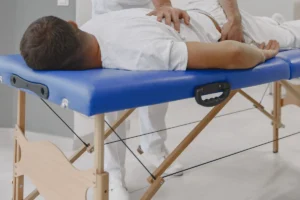

A pinched nerve in the neck happens when a nerve root is compressed or irritated where it leaves the spinal cord. The medical name is cervical radiculopathy. It often causes pain that spreads from the neck into the shoulder, arm or hand, sometimes with tingling, numbness or weakness. The good news: Cleveland Clinic reports that over 85% of cases get better without specific treatment within 8 to 12 weeks. Gentle movement and physical therapy through neck and spine therapy can help ease symptoms along the way.
This guide covers common symptoms and causes, what helps, how long it tends to last, and the signs that mean you should see a doctor.
What is a pinched nerve in the neck?
Nerves branch off your spinal cord and pass through small openings between the bones of your neck on their way to your shoulders, arms and hands. The American Academy of Orthopaedic Surgeons (AAOS) explains that cervical radiculopathy occurs when one of these nerves is compressed or irritated where it branches away from the spinal cord.
Because the nerve travels down the arm, the problem in your neck can be felt far away from it. That’s why a pinched nerve in the neck can make your hand tingle.
Pinched nerve in neck symptoms
Common symptoms include:
- Pain that spreads into the shoulder, shoulder blade, arm or hand
- Sharp or burning pain
- Tingling or a “pins and needles” feeling
- Numbness
- Muscle weakness in the arm or hand
The American Physical Therapy Association’s ChoosePT guide notes that pain may get worse when you look up and over your shoulder. Weakness and a lack of coordination in the arm and hand can also occur. According to Cleveland Clinic, symptoms typically affect only one side of the body.
What causes a pinched nerve in the neck?
The two most common causes are age-related changes in the spine and disc problems.
- Wear and tear with age. Cleveland Clinic says the majority of cases are due to cervical spondylosis, which is age-related wear and tear in the neck. The AAOS explains that these changes can narrow the openings where nerve roots leave the spine.
- A herniated or bulging disc. A disc between the bones of the neck can bulge and press on a nerve. In younger people, the AAOS notes, a sudden injury causing a herniated disc is the most common cause. Our page on herniated disc physical therapy explains disc problems in more detail.
Cleveland Clinic notes that cervical radiculopathy affects about 85 out of 100,000 people, and that the C7 nerve root is involved in over half of cases.
How long does a pinched nerve in the neck last?
For many people, not long. The AAOS says that for some patients the pain goes away in days or weeks, while for others it takes longer.
Cleveland Clinic reports that:
- Over 85% of cases get better without specific treatment within 8 to 12 weeks.
- About 90% of people have good to excellent results with nonsurgical treatment.
- Symptoms come back in up to one-third of people after they first improve.
Hospital for Special Surgery (HSS) agrees that most patients recover without surgery.
What helps a pinched nerve in the neck?
Most care starts simple. Your doctor may suggest medicines or other treatments; follow their advice on those. Common self-care and therapy steps include:
Keep moving gently
The NHS advises against wearing a neck collar for neck pain unless a doctor recommends one, because keeping your neck moving is generally better. If a collar is used, the AAOS says it should only be worn for a short time, since long-term use can weaken neck muscles. Cleveland Clinic notes providers typically don’t recommend wearing one for more than one to two weeks.
Heat, cold and a supportive pillow
For neck pain, the NHS suggests heat or cold packs and a low, firm pillow.
Look at how you sit and work
ChoosePT notes that good posture puts the least amount of pressure on your spinal discs. Its guide also covers workstation changes and safer ways to bend, reach and lift. Our guides to posture exercises for desk workers and ergonomic desk setup offer simple ways to start.
Can exercises help a pinched nerve in the neck?
Yes, when they are the right ones. The AAOS says specific exercises can help relieve pain, strengthen neck muscles and improve range of motion. Cleveland Clinic describes a typical path: start with gentle range-of-motion exercises, then add strengthening and conditioning as pain improves.
HSS advises doing neck exercises only as directed by a healthcare provider. That is good advice with nerve symptoms, because the right moves depend on which nerve is involved and what makes your symptoms better or worse. A therapist may start with gentle moves, such as the chin tuck, which OneRehab’s neck therapy page calls the most common neck exercise.
A simple rule while you exercise: if a move sends pain, tingling or numbness further down your arm, stop and tell your therapist.
How does a physical therapist treat a pinched nerve?
A physical therapist evaluates your neck motion, strength, posture and arm symptoms, then designs a plan. ChoosePT and HSS describe several parts of care:
- Exercise. Your therapist helps decide which muscle groups need strengthening, based on the nerve roots involved, and gives you a home program.
- Traction. Some therapists use gentle hands-on or mechanical traction to ease pressure in the neck. ChoosePT notes this can provide relief from pain and arm numbness.
- Manual therapy. Your therapist may gently massage the muscles of your neck and shoulder blade area.
- Posture and daily habits. This includes workstation changes and safer ways to bend, reach and lift.
ChoosePT notes that in many cases, physical therapy completely resolves symptoms. If symptoms don’t improve with nonsurgical care, your doctor may discuss other options, including surgery.
When to see a professional
Many cases settle on their own, but some signs call for a closer look.
Contact your doctor or a physical therapist if:
- Neck pain that travels down your arm doesn’t ease after a week or more of rest, as Cleveland Clinic advises.
- You have pins and needles or a cold arm along with neck pain. The NHS says to see a doctor in this case.
- Neck pain or stiffness doesn’t go away after a few weeks.
See a doctor promptly if:
- You notice muscle weakness in your arm or weaker reflexes. Cleveland Clinic advises contacting a provider as soon as possible.
- Your neck pain started after an accident, such as a fall. Cleveland Clinic suggests contacting your provider or going to the nearest hospital.
A doctor diagnoses the cause of your symptoms. A physical therapist evaluates how you move and treats the problem with you.
How OneRehab can help
OneRehab’s physical therapists treat radiculopathy and disc herniation through our neck and spine therapy program. Your first visit includes a review of your history, strength, range of motion and posture, followed by a plan that may include stretching, strengthening and posture work. We have two clinics, in Dallas and Richardson. Book a free screen to have a licensed physical therapist or certified athletic trainer assess your symptoms and recommend next steps, or schedule an appointment. In Texas, you can see a physical therapist without a referral.
Common questions
How do I know if I have a pinched nerve in my neck?
Common signs are neck pain that spreads into the shoulder or arm, with tingling, numbness or weakness, usually on one side. A doctor can confirm the cause.
How long does a pinched nerve in the neck take to heal?
Cleveland Clinic reports that over 85% of cases improve without specific treatment within 8 to 12 weeks. Some people feel better in days or weeks.
Should I wear a neck brace for a pinched nerve?
Only if your doctor recommends it, and usually only for a short time. The AAOS notes long-term collar use can weaken neck muscles.
Can a pinched nerve in the neck come back?
It can. Cleveland Clinic says symptoms return in up to one-third of people after they first improve.
Will I need surgery for a pinched nerve in my neck?
Most people don’t. HSS says most patients recover without surgery, and Cleveland Clinic reports about 90% have good to excellent results with nonsurgical care.
Sources
- Cervical Radiculopathy (Pinched Nerve in Neck), Cleveland Clinic, last updated March 29, 2022: https://my.clevelandclinic.org/health/diseases/22639-cervical-radiculopathy-pinched-nerve
- Cervical Radiculopathy (Pinched Nerve), OrthoInfo (American Academy of Orthopaedic Surgeons), n.d.: https://www.orthoinfo.org/en/diseases–conditions/cervical-radiculopathy-pinched-nerve/
- Physical Therapy Guide to Cervical Radiculopathy, ChoosePT (American Physical Therapy Association), expert review December 12, 2020: https://www.choosept.com/guide/physical-therapy-guide-cervical-radiculopathy
- Cervical Radiculopathy: Pinched Nerve in the Neck, Hospital for Special Surgery, updated March 10, 2025: https://www.hss.edu/health-library/conditions-and-treatments/cervical-radiculopathy
- Neck Pain, NHS, last reviewed April 27, 2023: https://www.nhs.uk/conditions/neck-pain/