
Achilles tendonitis is irritation of the tendon that connects your calf muscle to your heel. It usually causes pain and stiffness at the back of the heel or lower calf, often worst in the morning or after activity. It tends to build up from repeated stress rather than one injury. Most cases are treated without surgery, with relative rest, calf stretching and gradual strengthening, and a physical therapist can guide that plan. OneRehab treats Achilles problems as part of ankle and foot injury therapy.
Recovery is often slower than people expect, but steady, sensible rehab helps. Here is what to know about the symptoms, causes, exercises and timeline.
What is Achilles tendonitis?
The Achilles tendon is the thick band at the back of your ankle. It lets you push off when you walk, run or rise onto your toes. Achilles tendonitis (also spelled tendinitis) describes pain and irritation in this tendon.
You may also hear the term Achilles tendinopathy. Hospital for Special Surgery (HSS) explains that many long-lasting cases involve wear and breakdown in the tendon (tendinosis) rather than true inflammation. In everyday use, the terms often overlap, and the treatment ideas below apply to both.
Insertional vs noninsertional Achilles tendonitis
There are two main types, based on where it hurts:
| Type | Where it hurts | What else to know |
|---|---|---|
| Noninsertional | The middle of the tendon, a few centimeters above the heel | Often younger, active people, especially runners |
| Insertional | Where the tendon attaches to the heel bone | Bone spurs often form on the back of the heel |
The type matters because some exercises suit one type and not the other.
What are the symptoms of Achilles tendonitis?
Common symptoms include:
- Pain and stiffness along the tendon in the morning
- Pain that gets worse with activity, or the day after exercise
- Tenderness or swelling around the tendon
- Thickening of the tendon
- Pain at the back of the heel when wearing shoes
- Pain going up stairs or uphill
If your pain is mainly on the bottom of the heel instead, our post on plantar fasciitis exercises may fit better.
What causes Achilles tendonitis?
Achilles tendonitis is usually not tied to one specific injury. It comes from repeated stress on the tendon, often from doing too much too quickly. Common risk factors include:
- A sudden increase in how much or how hard you exercise
- A change in shoes
- Tight or weak calf muscles
- Sports with quick stops and starts, running and dancing
- Physically demanding jobs
- Being a “weekend warrior” who exercises hard only now and then
- Flat arches or ankles that roll inward
- A bony bump on the back of the heel that rubs the tendon
Runners who increase mileage quickly are a common example. If running is part of your routine, a running and motion analysis can look at how you move.
How is Achilles tendonitis treated?
Treatment usually starts without surgery. A doctor diagnoses the problem, and a physical therapist builds a rehab plan around it. Common parts of that plan include:
- Relative rest: Switching from high-impact activities such as running to low-impact ones like cycling, the elliptical or swimming reduces stress on the tendon while keeping you active.
- Ice: Ice the most painful area as needed, for up to 20 minutes at a time. Remove it sooner if the skin becomes numb.
- Supportive shoes: Your provider may suggest supportive footwear and, for some people, a night splint.
- Exercise: Stretching and gradual strengthening are a core part of rehab.
Medication, injections, shockwave therapy and surgery are decisions for your doctor. Talk with them about whether any of these make sense for you.
Achilles tendonitis exercises a physical therapist may suggest
These exercises are common examples, not a plan for you. A therapist should tailor them to your type of Achilles tendonitis and how sensitive the tendon is. Move slowly and stop if pain sharply increases.
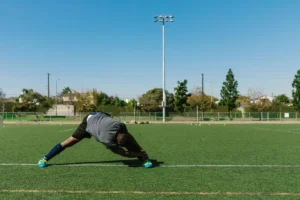
1. Calf stretch against a wall
- Stand facing a wall with your hands on it.
- Keep one knee straight with that heel on the ground, and bend the front knee.
- Gently push your hips toward the wall until you feel a stretch in the calf of the straight leg.
- Hold for 30 seconds, then relax.
You should feel the stretch in the calf, not pain in the Achilles tendon. AAOS OrthoInfo suggests repeating it 10 times for each foot.
2. Eccentric heel drops (for noninsertional only)
“Eccentric” means the muscle works while it lengthens. AAOS OrthoInfo describes heel drops this way:
- Hold a railing for balance and stand with the front half of your foot on the edge of a stable step.
- Rise up onto your toes.
- Slowly lower your heels as far as you comfortably can.
OrthoInfo advises doing these under a physical therapist’s supervision at first. Do not do heel drops off a step if you have insertional Achilles tendonitis. A therapist can suggest other strengthening options for that type.
3. Low-impact cardio
Cycling, swimming or the elliptical can keep up your fitness while the tendon settles. Your therapist can help you decide how much is right and when to start returning to running or jumping.
How long does Achilles tendonitis take to heal?
Be patient with yourself. Cleveland Clinic notes that Achilles tendonitis can be frustratingly slow to heal. Key points from trusted sources:
- AAOS OrthoInfo says it may take a few months for symptoms to improve a lot, and pain can last longer than 3 months even with early treatment.
- HSS notes that mild to moderate cases may resolve within 3 to 6 months with the right treatment.
- Surgery is generally considered only if pain does not improve after about 6 months of nonsurgical care.
Recovery is rarely a straight line. Good days and stiff days are normal, and a therapist can help you adjust your exercise load as you go.
How to prevent Achilles tendonitis
Cleveland Clinic offers some simple prevention tips:
- Warm up before you exercise or play sports.
- Increase the length and intensity of exercise slowly rather than all at once.
- Vary your workouts.
- Wear supportive shoes that fit well.
- Limit running uphill or on uneven ground.
For more ideas, see our earlier tips on avoiding running injuries and our guide to shin splints, another common overuse problem in runners.
When to see a professional
It is worth getting checked if:
- Your symptoms don’t improve after a few weeks
- The pain is severe
See a doctor promptly if you feel a sudden pop in the back of your calf or heel. That can be a sign the Achilles tendon has torn.
A doctor diagnoses the cause of heel pain and orders imaging if needed. A physical therapist evaluates how you move, then treats the problem with exercise and activity changes. In Texas, you can see a physical therapist without a referral.
How OneRehab can help
OneRehab’s physical therapists evaluate and treat Achilles tendon problems as part of ankle and foot injury therapy, and our sports medicine team works with athletes on returning to training. We see patients at both clinics, in Dallas and Richardson. To find out whether therapy is a good fit, book a free screen with a licensed physical therapist or certified athletic trainer, or schedule an appointment.
Common questions
Is Achilles tendonitis the same as Achilles tendinopathy?
They are closely related terms. Tendinopathy is the broader term, and many long-lasting cases involve breakdown in the tendon rather than inflammation.
Should I stop exercising completely?
Usually not. Switching to low-impact activities like cycling or swimming lowers the stress on the tendon while you stay active.
Can I stretch my Achilles if it hurts?
A gentle calf stretch is a common part of rehab. You should feel the stretch in the calf, not pain in the tendon.
Are heel drops good for every type?
No. Heel drops off a step are not recommended for insertional Achilles tendonitis, where the tendon meets the heel bone.
When is surgery considered?
Surgery is generally considered only if pain does not improve after about 6 months of nonsurgical treatment. That decision is made with your doctor.
Sources
- Achilles Tendinitis, American Academy of Orthopaedic Surgeons (OrthoInfo), n.d. (contributor and peer-review disclosures dated 2024-07-08 and 2025-04-09): https://www.orthoinfo.org/en/diseases–conditions/achilles-tendinitis/
- Achilles Tendinitis, Cleveland Clinic, updated 2024-03-06: https://my.clevelandclinic.org/health/diseases/21553-achilles-tendinitis
- Achilles Tendon Pain: Causes, Diagnosis and Treatment, Hospital for Special Surgery, updated 2025-10-06: https://www.hss.edu/health-library/conditions-and-treatments/list/achilles-tendon