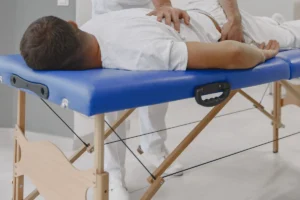

Chronic pain physical therapy helps you move more and hurt less over time. A physical therapist checks how you move, then builds a plan around graded exercise, hands-on care and clear education about pain. The goal is steady gains in what you can do each day, not a quick fix. If you live in North Texas, you can start with physical therapy at OneRehab in Dallas or Richardson.
Chronic pain means pain that lasts, or keeps coming back, for more than three months. It is very common. CDC researchers estimated that in 2021, about 20.9% of U.S. adults, or 51.6 million people, had chronic pain. If you are one of them, you are not alone, and there are practical steps that can help.
This guide covers why movement helps, what a therapy plan usually includes, and how to start when moving feels hard.
What is chronic pain?
Cleveland Clinic describes chronic pain as pain that lasts or recurs for more than three months. MedlinePlus adds that it can also mean pain that lasts longer than the time in which you should have healed.
Chronic pain has many sources. It can come from muscles, bones, joints and tendons, from nerves, or from long-term conditions. Cleveland Clinic also describes central sensitization, where changes in the nervous system make it more sensitive to pain. This helps explain why pain can continue after an injury has had time to heal. The pain is real, and it is treatable.
Can physical therapy help chronic pain?
Yes, for many people it is part of a sound plan. MedlinePlus lists physical therapy among the non-drug treatments for chronic pain. The CDC’s 2022 guideline on prescribing opioids for pain says nonopioid therapies are preferred for subacute and chronic pain. It advises clinicians to recommend exercise or exercise therapy, which it calls “a prominent modality in physical therapy,” for back pain, fibromyalgia and hip or knee osteoarthritis.
It helps to be realistic. MedlinePlus notes that chronic pain is not always curable, but treatment can help with your symptoms. In therapy, success often looks like walking farther, sleeping better, or getting back to a hobby, even if some pain remains.
How does movement help with chronic pain?
When something hurts, resting can feel like the safest choice. For long-lasting pain, though, gentle and gradual activity is often part of the answer.
The NHS explains that everyday activity such as walking, swimming, gardening or dancing may ease pain, partly by interrupting pain signals. It also says that if you become more active gradually, you are unlikely to cause damage, and that over time the benefits of exercise outweigh any increase in pain. The American Physical Therapy Association’s ChoosePT site says strengthening and flexibility work can help you move more efficiently with less discomfort.
What does chronic pain physical therapy include?
Every plan is built for one person, but most include a few common parts.
A thorough evaluation
According to ChoosePT, your physical therapist will ask about your past and present health and medicines, where and when you hurt, and how pain affects your day. They will check posture, flexibility, strength, joint mobility and movement. They also look at how you use your body at home, at work and during leisure time.
Graded exercise
Your therapist designs a graded exercise program. ChoosePT describes graded exercises as movements that gradually increase according to your abilities. You start at a level you can manage and build from there.
Hands-on care
ChoosePT explains that manual therapy is used to increase range of motion, improve the quality of the tissues and reduce pain. It is usually paired with exercise, not used alone.
Education about pain
Learning how pain works can make it less frightening. ChoosePT notes that education aims to improve your understanding of chronic pain. When you know that hurt does not always mean harm, it is easier to keep moving.
A home program
Most of your progress happens between visits. Your therapist will give you exercises to do at home and adjust them as you improve.
| Part of the plan | What it aims to do |
|---|---|
| Evaluation | Find out how pain affects your movement and daily life |
| Graded exercise | Build strength, flexibility and confidence step by step |
| Hands-on care | Improve range of motion and ease pain |
| Education | Help you understand pain and plan your activity |
How do you start moving when you hurt?
Starting is often the hardest part. These general ideas can help, but a therapist should tailor them to you. Stop and check in with your therapist or doctor if pain sharply increases.
- Start small. Pick an activity you can do on a bad day, such as a short walk, and begin there.
- Build up slowly. Add a little time or effort at a steady pace rather than in big jumps.
- Keep a daily rhythm. The NHS lists not pacing your activities every day as one of the habits that can make pain harder to manage. A steady, planned amount each day is easier to build on than a lot on good days and very little on bad ones.
- Choose gentle options. Walking and swimming are two of the everyday activities the NHS mentions.
- Protect your sleep. The NHS suggests a regular routine, going to bed and getting up at the same times, and avoiding daytime naps.
- Try slow breathing and relaxation. The NHS says practicing relaxation regularly can help reduce persistent pain.
If you are dealing with a specific area, earlier posts in this series may help, such as lower back pain exercises and knee osteoarthritis exercises.
What other treatments work alongside physical therapy?
Chronic pain often responds best to more than one approach. Cleveland Clinic lists lifestyle changes such as stress management and physical activity, physical and occupational therapy, and psychological therapies such as cognitive behavioral therapy (CBT), acceptance and commitment therapy and mindfulness. You can read more about cognitive behavioral therapy on OneRehab’s site.
If pain makes it hard to work, cook or care for yourself, occupational therapy can help you find easier ways to do daily tasks. Questions about medicines, injections or procedures belong with your doctor.
When to see a professional
You do not have to wait until pain is severe. ChoosePT notes that research shows treating pain as soon as possible helps to prevent chronic pain.
Cleveland Clinic suggests seeing a healthcare provider if:
- Pain is interfering with your daily life or keeping you from your usual activities.
- Pain gets worse or comes back after treatment.
- You have side effects from a treatment.
- You feel anxious or depressed.
- Pain is disrupting your sleep.
Your doctor diagnoses the cause of pain and manages medicines. A physical therapist evaluates how pain affects your movement and builds a plan to improve it. Many people work with both.
How OneRehab can help
OneRehab’s physical therapists evaluate how chronic pain affects your movement and daily life, then build a plan around exercise, hands-on care and education. Learn more about physical therapy at OneRehab, offered at both clinics in Dallas and Richardson. In Texas you can see a physical therapist without a referral. To take the first step, book a free screen or schedule an appointment.
Common questions
Will exercise make my chronic pain worse?
Some soreness can happen as you become more active. The NHS says that if you increase activity gradually, you are unlikely to cause damage, and that over time the benefits outweigh any increase in pain.
Can physical therapy cure chronic pain?
Not always. MedlinePlus says chronic pain is not always curable, but treatments can help. Therapy aims to help you move and function better.
Is chronic pain all in my head?
No. Chronic pain is real. Cleveland Clinic explains that changes in the nervous system can make it more sensitive to pain, which is one reason pain can continue after tissues heal.
Do I need an MRI before physical therapy for chronic pain?
ChoosePT notes that imaging tests such as x-rays, CT scans and MRI are often not helpful for finding the cause of chronic pain. Whether you need imaging is a decision for your doctor.
Do I need a referral to see a physical therapist?
In Texas, you can see a physical therapist without a referral. Check with your insurance plan about its rules.
Sources
- Chronic Pain, Cleveland Clinic, updated 2024-09-03: https://my.clevelandclinic.org/health/diseases/4798-chronic-pain
- Physical Therapy Guide to Chronic Pain, ChoosePT (American Physical Therapy Association), revised 2024-07-01: https://www.choosept.com/guide/physical-therapy-guide-chronic-pain
- Chronic Pain Among Adults: United States, 2019–2021, CDC MMWR, published 2023-04-14: https://www.cdc.gov/mmwr/volumes/72/wr/mm7215a1.htm
- CDC Clinical Practice Guideline for Prescribing Opioids for Pain: United States, 2022, CDC MMWR Recommendations and Reports, published 2022-11-04: https://www.cdc.gov/mmwr/volumes/71/rr/rr7103a1.htm
- Ways to manage chronic pain, NHS, reviewed 2023-05-02: https://www.nhs.uk/live-well/healthy-body/ways-to-manage-chronic-pain/
- Chronic Pain, MedlinePlus (National Library of Medicine), updated 2025-06-19: https://medlineplus.gov/chronicpain.html