
A hamstring strain is a stretch or tear in the muscles along the back of your thigh. It usually happens during sprinting, jumping or a sudden burst of speed, and you feel a sharp pain in the back of the leg. Recovery time depends on the grade: a mild (grade 1) strain may feel better in less than a week, while partial and complete tears can take up to several months. Rehab that rebuilds flexibility and strength, guided by a sports medicine physical therapist, helps you get back to activity with less risk of hurting it again.
This guide walks through the three grades, what to do in the first few days, the stages of rehab and when to get the injury checked.
What is a hamstring strain?
Your hamstrings are three muscles: the semitendinosus, the semimembranosus and the biceps femoris. They run from the bottom of your pelvis, down the back of the thigh, to just below the knee.
A strain, often called a “pulled hamstring,” happens when the muscle is overloaded. The American Academy of Orthopaedic Surgeons (AAOS) says muscle overload is the main cause. Sprinting and sports with quick starts and stops, like soccer, are common settings.
Hamstring strain grades
Doctors and therapists grade hamstring strains by how much of the muscle is torn. Cleveland Clinic describes them this way:
| Grade | What it means | Typical signs |
|---|---|---|
| Grade 1 | Mild strain with very little torn muscle | Soreness and tightness |
| Grade 2 | Moderate strain with a partial tear | More pain, swelling and bruising, often some loss of strength |
| Grade 3 | Severe strain where the muscle is completely torn | Significant pain, bruising and weakness, trouble moving the leg |
In some grade 3 injuries, the tendon pulls away from the bone. AAOS calls this an avulsion. These are the injuries most likely to need surgery.
Signs you have pulled your hamstring
AAOS and ChoosePT, the American Physical Therapy Association’s patient site, describe common symptoms:
- A sudden, sharp pain in the back of the thigh or buttock, often forcing you to stop
- A feeling of a “pop” or tearing in the muscle
- Swelling in the first few hours
- Bruising that may appear over several days, sometimes below the knee
- Tenderness, and trouble sitting or straightening your knee
- Weakness or a limp
Pain in the back of the thigh can also come from an irritated nerve in the low back. If your pain started without a clear moment of injury, our article on sciatica exercises explains how nerve pain tends to feel.
Hamstring strain recovery time
Every injury is different, but here are typical ranges from trusted sources:
- Mild (grade 1): Cleveland Clinic says you might need less than a week to feel better. The NHS notes that mild hamstring injuries usually get better in a few days.
- Moderate and severe (grades 2 and 3): Cleveland Clinic says recovery can take up to several months. The NHS says severe injuries can take weeks or months to heal.
- After surgery: Recovery takes longer. AAOS says that after repair of a tendon at the top of the hamstring, it is typically at least 6 months before returning to athletic activity.
ChoosePT notes that returning to sport after a hamstring injury can take weeks to months. Feeling better is not the same as being ready for full speed, which is why rehab continues after the pain fades.
What to do in the first few days
For mild to moderate strains, the NHS suggests PRICE care for the first 2 to 3 days:
- Protect the leg from further injury.
- Rest from the activity that hurt it.
- Ice wrapped in a towel for up to 20 minutes every 2 to 3 hours.
- Compress with an elastic bandage to help limit swelling.
- Elevate the leg when you can.
The NHS also advises avoiding heat, massage and alcohol for the first 3 days. Once pain allows, keep the leg moving gently so it doesn’t stiffen. Cleveland Clinic notes that some providers prefer an approach called MEAT (movement, exercise, analgesia and therapy), so follow the plan your provider gives you.
Hamstring strain rehab: what to expect
AAOS says therapy starts once pain and swelling settle, beginning with gentle stretches and adding strengthening exercises as healing progresses. ChoosePT describes a plan that may include hands-on manual therapy, range-of-motion work, progressive strengthening and functional training that prepares you for running, cutting and jumping.
Early stage: restore easy movement
Gentle, pain-free movement comes first, such as easy walking as comfort allows. The goal is to keep the leg from stiffening while the muscle starts to heal.
Middle stage: rebuild flexibility and strength
These moves come from the AAOS knee conditioning program. A therapist can tell you when to start each one and how much to do. AAOS notes that you should not feel pain during an exercise, so stop if pain sharply increases.
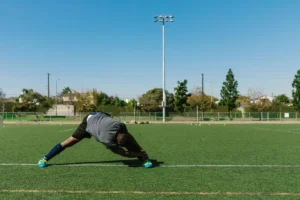
- Supine hamstring stretch. Lie on your back with both knees bent. Straighten one leg and gently draw it toward you until you feel a mild stretch. Keep it gentle, especially early on.
- Standing hamstring curl. Hold a chair or wall for balance. Bend your knee and raise your heel toward the ceiling as far as you can without pain, then lower slowly.
- Prone straight-leg raise. Lie on your stomach with your legs straight. Tighten your buttock and hamstring muscles and lift the leg a little way, then lower slowly.
Late stage: return to sport
The final stage builds speed and power with drills that look like your sport. ChoosePT advises increasing the frequency and intensity of activity gradually. Your therapist will help you decide when you’re ready to sprint and play again.
How to lower your risk of another hamstring strain
Re-injury is a real concern. ChoosePT notes that after tearing a hamstring muscle, a person is more than three times more likely to suffer a later injury. AAOS adds that re-injuring your hamstring raises the risk of lasting damage.
Risk factors listed by ChoosePT and AAOS include a previous hamstring strain, hamstring weakness, tight muscles, muscle imbalance, fatigue, poor conditioning, increasing age and an inadequate warm-up. To lower your risk:
- Warm up before sports and workouts.
- Increase training gradually.
- Keep your hamstrings strong and flexible year-round.
- Finish your full rehab program, even after the pain fades.
For more on staying healthy in sport, see our earlier articles on the most common sports injuries and avoiding running injuries.
When to see a professional
Cleveland Clinic suggests seeing a provider if symptoms last more than a few days. See a doctor promptly if:
- You can’t walk, or you have significant swelling and bruising
- Pain is severe or getting worse
- The injury isn’t improving with home care
- You’ve hurt the same hamstring before
Go to the emergency room if pain is severe or you can’t move or use your leg at all, as Cleveland Clinic advises. A doctor can check for a complete tear or tendon avulsion and decide on imaging. ChoosePT recommends seeing a physical therapist soon after the injury, especially if you have significant swelling or can’t bear weight. A therapist evaluates your strength and flexibility and guides your rehab.
How OneRehab can help
OneRehab’s sports medicine physical therapists evaluate and treat hamstring strains and other sports injuries, with programs that rebuild strength and flexibility and prepare you to return to play. Learn more about sports medicine physical therapy and our hip injury therapy for strains near the hip. We see patients at both our Dallas and Richardson clinics. To get started, book a free screen or schedule an appointment. In Texas, you can see a physical therapist without a referral.
Common questions
How long does a pulled hamstring take to heal?
A mild strain may feel better within a few days to a week. Partial and complete tears can take up to several months, according to Cleveland Clinic, and longer if surgery is needed.
Should I stretch a pulled hamstring right away?
Not hard. AAOS says therapy starts once pain and swelling settle, beginning with gentle stretches. Early on, aim for easy, pain-free movement.
Can I walk with a hamstring strain?
Many people with a mild strain can walk, though it may be sore. If you can’t walk or put weight on the leg, see a provider promptly.
What does a grade 2 hamstring strain feel like?
A grade 2 strain is a partial tear. It usually causes more pain, swelling and bruising than a mild strain, and Cleveland Clinic notes that grade 2 and 3 strains usually cause a loss of strength.
Why do hamstring strains keep coming back?
A previous strain is one of the biggest risk factors. ChoosePT notes a person is more than three times more likely to have another injury after a hamstring tear, which is why completing rehab matters.
Sources
- Hamstring Muscle Injuries, American Academy of Orthopaedic Surgeons (OrthoInfo), n.d.: https://www.orthoinfo.org/en/diseases–conditions/hamstring-muscle-injuries/
- Knee Conditioning Program, American Academy of Orthopaedic Surgeons (OrthoInfo), n.d.: https://www.orthoinfo.org/en/recovery/knee-conditioning-program/
- Hamstring Injury, Cleveland Clinic, last updated 04/16/2025: https://my.clevelandclinic.org/health/diseases/17039-hamstring-injury
- Hamstring injury, NHS, last reviewed 28 July 2025: https://www.nhs.uk/conditions/hamstring-injury/
- Physical Therapy Guide to Hamstring Injuries, ChoosePT (American Physical Therapy Association), revised Apr 6, 2026: https://www.choosept.com/guide/physical-therapy-guide-hamstring-injuries