The most helpful posture exercises for desk workers are short, simple moves you can repeat through the day: chin tucks, shoulder rolls, shoulder blade squeezes, chest stretches and gentle back movements like cat-cow. Pair them with frequent breaks. Physical therapists at Hospital for Special Surgery (HSS) suggest checking your posture about every 15 minutes and getting up to move every half hour or so. If you already have neck or back pain, a physical therapist can tailor a plan through neck and spine therapy.
Here is the main idea behind it all. An HSS physical therapist puts it simply: no posture is good for too long a period of time. The goal is not to sit perfectly still in a “perfect” position. It’s to move often and keep the muscles that hold you upright strong and flexible.
Why does desk work affect your posture?
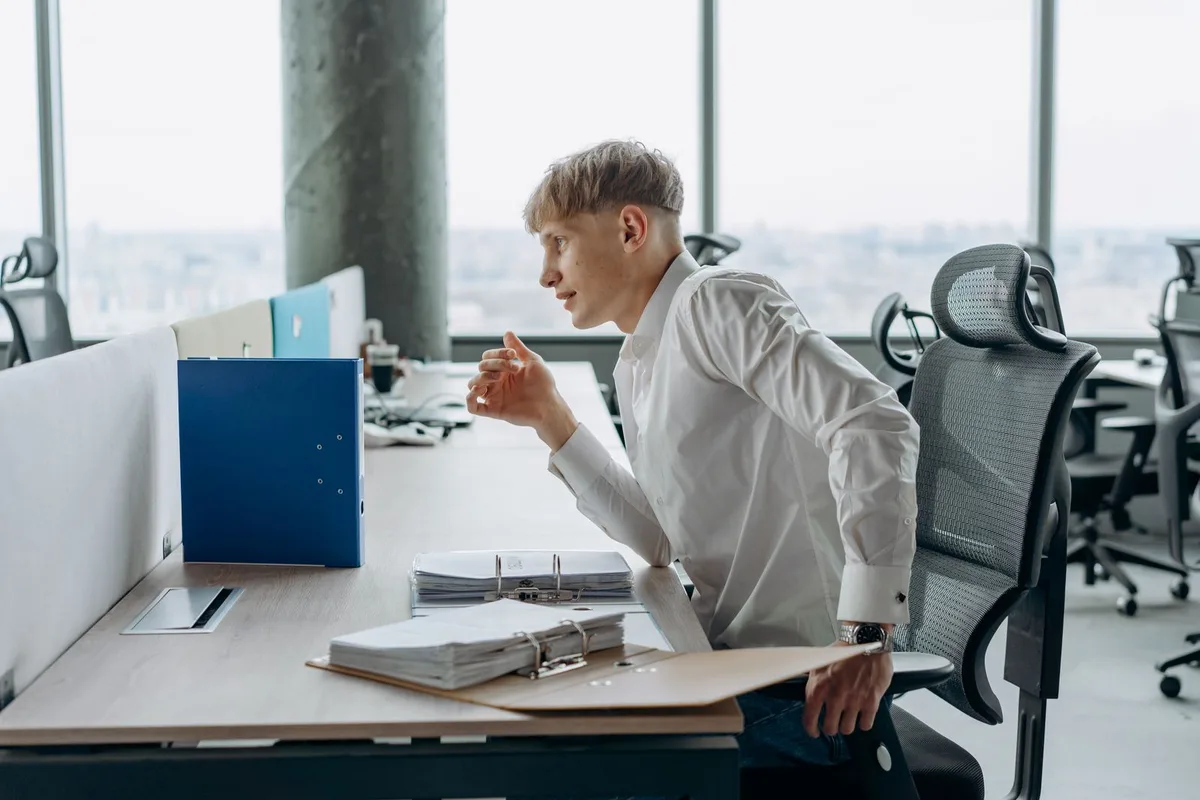
When you sit for hours, it’s easy to slump, push your head toward the screen, or let your shoulders round forward. An HSS article on working from home notes that we are not built to sit for eight to 10 hours.
The American Physical Therapy Association’s ChoosePT site explains that repetitive activities and lack of movement can contribute to aches and pains. So can sitting for long periods at a workstation that isn’t set up well. Small changes in how often you move, and how you sit, can add up.
How often should you take posture breaks?
Short, frequent breaks seem to matter more than one long workout. Advice from HSS physical therapists includes:
- Check in on your posture about every 15 minutes.
- Get up and move around every half hour or so.
- At the very least, stand up every 20 minutes.
ChoosePT recommends “micro breaks” through the day. Even getting out of your chair for 30 seconds counts.
A quick posture check while you sit
Before you start the exercises, take a few seconds to reset. HSS suggests this sitting check:
- Sit with your feet flat on the floor.
- Tuck your chin and move your head back.
- Lower your shoulder blades and gently pinch them together.
To feel what neutral alignment is like, HSS suggests standing with your heels, buttocks, shoulders and the back of your head against a wall.
Posture exercises you can do at your desk
These moves come from HSS physical therapists and MedlinePlus, the National Library of Medicine’s health site. Move slowly, breathe normally and stay in a comfortable range. Stop if pain sharply increases. A physical therapist can adjust them for you.
- Chin tuck. Sit tall. Pull your chin straight back so your ears line up over your shoulders. Don’t tip your head up or down. Hold a few seconds, then relax. OneRehab’s neck therapy page calls the chin tuck the most common neck exercise.
- Neck nods and tilts. Nod your chin toward your chest, then look up, 3 or 4 times. Next, move each ear toward the same shoulder without lifting your shoulders. MedlinePlus suggests holding a side tilt for 15 seconds, three times per side.
- Shoulder shrugs and rolls. Shrug your shoulders up toward your ears and hold for three seconds. Then roll them back and down. MedlinePlus suggests repeating this 10 times.
- Shoulder blade squeeze. Sit or stand tall. Squeeze your shoulder blades together, then release. Repeat several times, then make four large shoulder circles, as HSS suggests.
- Executive stretch. While seated, lace your fingers behind your head. Bring your elbows back and toward each other as far as is comfortable. Breathe in and hold for 20 seconds. Breathe out, relax, and repeat once, per MedlinePlus.
- Wrist stretch. Hold one arm out with your elbow straight. Bend your hand up and back, then let your wrist drop toward the floor. Repeat a few times on each side, then circle your wrists, as HSS describes.
Moves for your back during breaks
When you stand up for a break, add one or two of these. They are a good way to loosen up after a long stretch of sitting.
- Cat-cow. On your hands and knees, slowly round your back toward the ceiling, then let it gently sag as you lift your head. HSS suggests doing this slowly for 30 seconds to one minute, a few times through the day.
- Open book. Lie on your side with your hips and knees bent and your arms out in front of you, palms together. Sweep your top arm up and over toward the floor behind you, letting your head and eyes follow. Return and repeat at least 5 times per side. This one comes from an HSS physical therapist’s posture workout.
Building strength for better posture
Stretching helps, but strength matters too. HSS physical therapists suggest focusing strength work on your shoulders and upper back, core, hips and legs. Strengthening should lead to muscle fatigue, but not pain. Mild soreness afterward is normal, and HSS recommends a rest day between strength sessions.
Two simple options:
- Bridge. Lie on your back with your knees bent and arms at your sides. Lift your hips using your stomach and buttock muscles. Hold five seconds and lower. MedlinePlus suggests working up to 20 repetitions.
- Plank. Rest on your forearms with your elbows under your shoulders. Lift your body so you form a straight line from head to heels, keeping your back flat. An HSS therapist suggests starting at 10 to 15 seconds and adding a little time as you get stronger.
For more core work that also helps the lower back, see our guide to lower back pain exercises.
Tips for stretching safely
HSS offers a few simple guidelines:
- Hold each stretch for 15 to 30 seconds and repeat two to three times.
- Relax the muscle as you stretch.
- Check your alignment.
- Don’t forget to breathe.
When to see a professional
Stiffness from sitting usually eases once you move more. It’s worth getting help when:
- Neck, shoulder or back pain keeps coming back or doesn’t ease with breaks and gentle exercise.
- Pain limits your work, sleep or daily tasks.
- You aren’t sure which exercises are right for you. ChoosePT encourages contacting a physical therapist for an evaluation and treatment specific to you.
See a doctor promptly if neck or back pain comes with numbness, tingling or weakness, fever, or if it started after a fall or injury. These signs come from NIH (NIAMS) guidance on back pain.
How OneRehab can help
OneRehab’s physical therapists evaluate posture-related neck and back pain, look at your strength, range of motion, gait and posture, and build a plan of stretching and strengthening through our neck and spine therapy program. Learn more about our physical therapy services. You can visit our Dallas or Richardson clinic. Book a free screen to have a licensed physical therapist or certified athletic trainer assess your pain and recommend next steps, or schedule an appointment. In Texas, you can see a physical therapist without a referral.
Common questions
Can posture exercises fix bad posture?
They can help. HSS physical therapists say good posture depends on both strengthening and stretching your muscles, plus moving often during the day.
How long should I do posture exercises each day?
There is no set number. Short, frequent breaks seem to matter most: HSS therapists suggest getting up to move every half hour or so.
What is the best exercise for forward head posture?
The chin tuck is a common choice. Pull your chin straight back so your ears sit over your shoulders, as HSS describes.
Is there a perfect sitting posture?
Not really. As one HSS physical therapist notes, no posture is good for too long a period of time, so changing positions often matters.
Should exercises for posture hurt?
No. HSS says strengthening should lead to muscle fatigue, but not pain. Stop if pain sharply increases and check with a therapist.
Sources
- 6 Ways to Improve Your Posture, From a Physical Therapist, Hospital for Special Surgery, published December 15, 2022: https://www.hss.edu/health-library/move-better/improve-posture
- Avoid These Common Aches and Pains While Working from Home, Hospital for Special Surgery, published February 4, 2021: https://www.hss.edu/health-library/move-better/avoid-work-from-home-pain
- The Better Posture Workout: 5 Moves to Try, Hospital for Special Surgery, published February 26, 2023: https://www.hss.edu/health-library/move-better/posture-workout
- 6 Exercises You Can Do in Your Office, MedlinePlus Magazine (National Library of Medicine), published April 20, 2021: https://magazine.medlineplus.gov/article/6-exercises-you-can-do-in-your-office
- Workplace Wellness: Office Ergonomics, ChoosePT (American Physical Therapy Association), revised December 20, 2018: https://www.choosept.com/health-tips/workplace-wellness-office-ergonomics
- Exercise: Posture Break for Office Workers (video), ChoosePT (American Physical Therapy Association), June 3, 2020: https://www.choosept.com/video/exercise-posture-break-office-workers
- Back Pain, National Institute of Arthritis and Musculoskeletal and Skin Diseases, last reviewed February 2023: https://www.niams.nih.gov/health-topics/back-pain