A concussion can feel confusing. You may look fine, yet your head feels off. For some, that means dizziness or headache. For others, it shows up as fatigue, slow thinking, or trouble concentrating. These concussion symptoms are common after head injuries, even when imaging looks normal.
Families across Dallas and Richardson tell us they want clarity. They want to know what matters, what is normal, and how concussion diagnosis and recovery decisions are made. At OneRehab, we rely on objective measure data combined with careful listening. That balance helps concussion patients move forward with confidence.
When you come in, we do not tell you to tough it out. We also avoid weeks of isolation with no direction. Instead, we use repeatable concussion assessment tools to guide diagnosis and management, track recovery from concussion, and support safe return to physical activities, work, school, or sport.
Why Objective Measures Matter After A Concussion
Concussion symptoms can change daily. Sleep, stress, screens, and activity level all affect brain function. Relying only on how you feel can make recovery harder to judge.
Objective testing helps remove guesswork. It allows your care team to assess brain function, monitor response to exertion, and support diagnosis and treatment decisions.
Objective testing supports:
- A clear starting point for concussion evaluation
- Safer pacing during concussion recovery
- Better communication with parents, teachers, coaches, and employers
- More confident decisions about activity progression
- Reduced risk of setbacks following a suspected concussion
This approach aligns with current diagnosis and management recommendations in sports medicine and concussion care.
Understanding Objective Measures For Concussion Diagnosis Recovery
When we talk about it, we mean standardized assessment tools that track function over time. These tools strengthen concussion diagnosis. They do not replace clinical judgment.
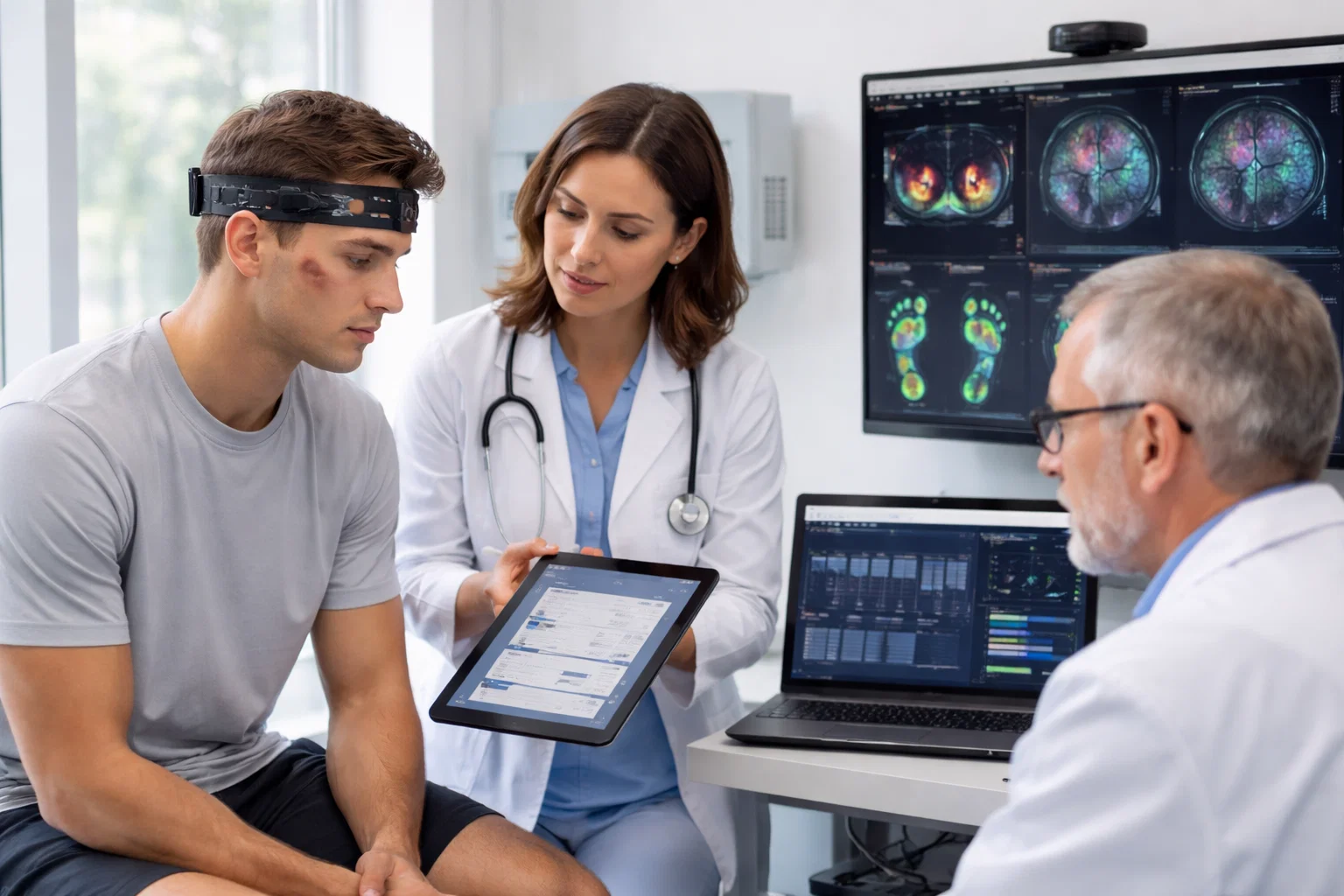
Depending on your situation, your concussion evaluation may include:
- Balance and postural control testing
- Reaction time and processing speed measures
- Eye movement and visual tracking assessments
- Dual-task testing that challenges cognitive and physical systems
- Exertion response monitoring during controlled physical activities
Each concussion assessment tool helps us understand how the brain responds to load, movement, and decision-making. We explain what each test shows and how it connects to your recovery plan.
What Makes This Approach Different
Many concussion programs rely heavily on symptom checklist reporting. Symptom checklists matter, but they have limits.
Some patients under-report concussion signs and symptoms because they want to return faster. Others over-report because anxiety blurs what is concussion-related and what is stress-related.
Objective testing adds structure by:
- Providing shared reference points for diagnosis and management
- Identifying issues associated with concussion, such as visual strain or balance deficits
- Supporting consistent concussion management decisions
- Reducing confusion during concussion recovery
Instead of waiting and guessing, patients follow a clear plan with re-testing built in.
How Objective Testing Fits Into Your Recovery Plan
There is no single timeline for concussion recovery. Some patients improve quickly after an acute concussion. Others need more time, especially with prior head injuries, poor sleep, migraines, or repeat concussion history.
We use assessment tools to guide next steps, which may include:
- A graded return to physical activities
- Vestibular rehabilitation for dizziness or motion sensitivity
- Visual therapy for eye strain and tracking difficulty
- Work or school pacing strategies
- Strength and coordination retraining
This is where objective measures for concussion diagnosis recovery matter most. If exertion improves but reaction time lags, we adjust. If tolerance increases without symptom spikes, we progress.
What Does Imaging Biomarkers Can Tell Us
Patients often ask about scans. Imaging may be needed to rule out serious injury after a fall or collision. However, most concussion cases, including sport-related concussion and sports-related concussion, do not appear on standard CT or MRI.
Concussion research continues to explore imaging biomarkers, but they are not required for most patients with concussion.
In practical terms:
- Imaging helps rule out dangerous complications
- Imaging may support diagnosis in complex cases
- Functional testing remains essential for recovery decisions
If imaging has been done, we include it. If not, we help you decide when to discuss it with your provider.
Diagnosis And Recovery Guidelines We Follow
Modern concussion care follows updated guidance from sports medicine and neurology, including recommendations shaped by the consensus statement on concussion and the conference on concussion in sport.
In practice, this means:
- Establishing a baseline concussion evaluation
- Building a gradual return plan instead of full rest or full activity
- Monitoring both cognitive and physical response
- Adjusting management of concussion when symptoms flare
This approach applies to concussion in children and adolescents, concussion in collegiate athletes, and adults with non-sport head injuries.
Who Benefits From Objective Concussion Testing
Objective testing is not just for athletes. We support patients with concussion from many causes.
This includes:
- Students returning to school after concussion
- Adults working long hours on screens
- Parents managing busy households
- Individuals recovering from falls or car accidents
- Athletes returning after sport concussion
Whether you suffered a concussion at work, in sport, or in daily life, objective assessment supports safer recovery.
What To Expect At OneRehab In Dallas
Your visit starts with conversation. We review the injury, concussion symptoms, sleep patterns, work or school demands, and daily challenges. Family members are welcome.
Then we assess functions using appropriate evaluation tools. If a test is not useful at your stage, we do not force it.
Local details that help:
- Convenient access for Dallas and Richardson patients
- DART accessibility for those avoiding driving
- Nearby parking to reduce symptom aggravation
- Scheduling that fits work and school demands
How We Track Progress Over Time
Recovery is rarely linear. Objective tracking helps show trends beyond daily ups and downs.
We compare:
- Baseline concussion testing
- Midpoint re-evaluations
- Pre-return clearance assessments
This helps answer questions like:
- Are symptoms decreasing with activity?
- Is balance improving in busy environments?
- Is recovery faster after exertion?
- Is screen tolerance increasing?
Supporting Safe Return To Work, School, And Sport
Returning too early increases concussion risks. Waiting too long can increase fear and deconditioning.
We support:
- Return-to-learn planning
- Return-to-work accommodations
- Return-to-sport progression using exertion testing
Clear documentation helps teachers, employers, and coaches respond appropriately.
When Symptoms Last Longer Than Expected
Persistent concussion symptoms do not mean failure. They often indicate specific systems needing support.
Objective testing may reveal:
- Vestibular dysfunction
- Visual tracking strain
- Autonomic response issues
- Cognitive load sensitivity
Targeted concussion rehabilitation often changes the trajectory.
Why Dallas Families Choose OneRehab
Families choose OneRehab because they want clarity, structure, and evidence-based concussion care.
You can expect:
- A structured concussion evaluation
- Clear diagnosis and management guidance
- Objective re-testing over time
- A team that listens and explains
We use objective measures for concussion diagnosis recovery so decisions are based on data, not pressure.
Take The Next Step With Confidence
If you are dealing with lingering concussion symptoms, you do not have to guess. Schedule an evaluation with OneRehab in Dallas.
We will assess, explain, and guide your recovery from concussion step by step. And as you improve, we will show you the data behind it. That is the value of objective measures for concussion diagnosis recovery.