
A brain injury can change a normal day in a split second. After the hospital visits, scans, follow-ups, and phone calls, many families are left with a harder question. What now?
That question shows up in homes across Dallas and Richardson every week. One person may be dealing with headaches, dizziness, poor balance, or memory changes. Another may look mostly fine from the outside but still struggle to get through work, errands, or a simple conversation without feeling drained. Recovery rarely feels neat. It can be frustrating, emotional, and slow in ways people do not expect.
At OneRehab, we understand that life after brain injury is not only about symptoms on a chart. It is about getting through a grocery run without feeling overwhelmed. It is about driving with confidence again, walking safely, finding words more easily, and helping family members feel less lost in the process. For people around Dallas, Lake Highlands, North Dallas, Richardson, and nearby DFW communities, that kind of support matters. And it needs to feel practical, local, and personal.
What Recovery Can Look Like
The first thing many patients and families need to hear is simple. Recovery does not always move in a straight line.
Some weeks feel encouraging. Then a busy weekend, a poor night of sleep, or too much screen time can bring symptoms right back to the surface. That does not always mean something is wrong. It often means the brain and body still need structured support, pacing, and a treatment plan that fits real life.
The road to recovery after a brain injury may include work on physical movement, balance, coordination, stamina, memory, attention, speech, visual tracking, or daily routines. It may also include learning how to manage overstimulation in crowded places, how to return to exercise without setbacks, or how to handle the mental fatigue that can sneak up in the middle of an ordinary afternoon.
For some people, the biggest challenge is physical. They may feel unsteady on stairs, tire quickly, or struggle with headaches during movement. For others, the harder part is cognitive or emotional. They may lose track of conversations, feel more irritable than usual, or avoid activities they used to enjoy because everything feels like too much. Both experiences are real. Both deserve support.
That is why life after brain injury should never be reduced to one symptom, one timeline, or one type of therapy.
Common Changes Patients And Families Notice
Many people think brain injury recovery only applies to the most severe cases. That is not true. Even a mild traumatic brain injury can affect day-to-day life in ways that feel disruptive and confusing.
You might notice:
- headaches that flare during reading, work, or exercise
- dizziness when turning, bending, or walking through busy spaces
- balance problems or a new fear of falling
- slower thinking or difficulty focusing
- memory lapses that were not there before
- light sensitivity, screen sensitivity, or visual strain
- fatigue that feels stronger than normal tiredness
- mood changes, frustration, or social withdrawal
- trouble returning to work, school, driving, or household tasks
Families often notice these changes before the patient fully puts them into words. A spouse may see that conversation takes more effort. A parent may notice a teen gets overwhelmed faster. A grown adult may keep saying, “I should be better by now,” even while clearly dealing with lingering symptoms.
This is one reason early rehab matters. Good management and treatment for brain injury is not only about checking boxes in a clinic. It is about connecting symptoms to daily function and helping people rebuild confidence one step at a time.
How Therapy Supports Life After Brain Injury
When people hear the word rehab, they sometimes picture only strength exercises or basic mobility work. Brain injury rehab is broader than that.
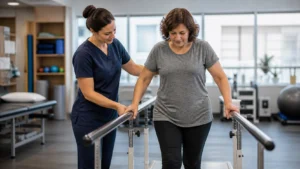
At OneRehab, treatment can focus on how your brain and body work together in daily life. A care plan may include physical therapy for gait, balance, endurance, vestibular issues, or movement tolerance. It may also involve work that helps with coordination, posture, body awareness, and safe return to activity. Depending on your needs, other rehab disciplines can support communication, cognition, fine motor skills, and functional tasks at home or at work.
A strong plan usually starts with listening. What symptoms show up first thing in the morning? What happens when you go to a noisy restaurant, a church service, or a family event? Can you handle a trip down Central Expressway without feeling overloaded? Do fluorescent lights at a store near NorthPark Center make symptoms spike? Those details matter because recovery has to match the life you are actually trying to get back to.
Therapy may include:
- balance and gait training
- vestibular exercises for dizziness and motion sensitivity
- graded activity to rebuild tolerance without overdoing it
- coordination work for safer movement
- visual and movement integration tasks
- education on pacing, rest, and symptom tracking
- return-to-work or return-to-routine guidance
- family education so home support feels clearer and less stressful
The goal is not to rush people. The goal is to help them move forward with structure.
Why Local Support Matters In Dallas And Richardson
Recovery is easier to stick with when care fits your routine.
For families around Dallas and Richardson, logistics can affect everything. If you are coming from Lakewood, Preston Hollow, University Park, East Dallas, or Richardson, travel time matters. Parking matters. Whether a place feels easy to reach after a long day matters. Patients dealing with fatigue or dizziness do not need extra friction before they even walk through the door.
That is one reason local rehab can make a real difference. If your week already includes work, school pickup, doctor visits, and everyday DFW traffic, the right clinic should feel accessible, not like another burden. Families often look for locations with straightforward parking, practical scheduling, and routes that make sense whether they are driving in from nearby neighborhoods or using DART connections for part of the trip.
People also want care that understands the rhythm of this area. Dallas is busy. Richardson families juggle a lot. Some patients want appointments that work before the day gets too packed. Others need time later in the afternoon after school or work. Having a rehab team that respects that reality can make it easier to stay consistent, and consistency often matters more than people think.
The Family Side Of Recovery
A brain injury affects more than one person. Even when one patient is in treatment, the whole household often adjusts around the injury.
Family members may become schedulers, drivers, note takers, and emotional anchors all at once. They may also feel unsure about what helps and what makes things worse. Should they encourage more activity, or more rest? Is forgetfulness part of healing, or a sign something needs attention? Is irritability personal, or symptom-related?
This part of life after brain injury deserves real space in the conversation.
Families often benefit from clear guidance on how to support recovery at home. That might mean simplifying routines, reducing sensory overload, giving one instruction at a time, planning breaks during errands, or setting realistic expectations for social events. Sometimes it also means letting go of the idea that the patient should “push through” the same way they used to. Recovery often improves when people learn how to pace, not when they force themselves past every limit.
A good rehab process can help families understand what is happening and what practical steps may help at home, at work, and out in the community.
What Progress Often Looks Like
Progress can be subtle at first.
It may look like getting through a Target run without needing to leave early. It may mean fewer headaches after a workday. It may mean walking more steadily at White Rock Lake, tolerating a longer car ride, reading for twenty minutes instead of five, or feeling less wiped out after dinner with family.
Those wins count.
The road to recovery after a brain injury is often built from small gains that stack up over time. A patient may first notice they recover faster after activity. Then they may start handling longer conversations. Later, they may return to work tasks, exercise, or community events with better control and fewer setbacks.
That is why it helps to work with a team that notices the details. Not every improvement looks dramatic from the outside. But when rehab is working, daily life starts to feel more manageable. And that matters.
Frequently Asked Questions About Life After Brain Injury
How long does brain injury recovery take?
It depends on the type of injury, the symptoms involved, the person’s health history, and how daily demands affect healing. Some people improve steadily over weeks. Others need a longer rehab period. Recovery timelines vary, which is why individual evaluation matters.
What if symptoms seem mild but still disrupt daily life?
That still matters. A person can have symptoms that look mild on paper but feel very disruptive at home, at work, or in the community. Trouble with balance, attention, fatigue, and overstimulation can all affect daily function.
Can therapy help months after an injury?
Yes, in many cases it can. Some patients do not start rehab right away. Others improve at first, then reach a plateau. Structured therapy may still help identify lingering problems and support better function.
What type of rehab is used for brain injury recovery?
That depends on the person. Rehab may include physical therapy, vestibular work, balance training, cognitive support, communication support, and other services based on symptoms and goals. Good management and treatment for brain injury should match what the patient is dealing with in real life.
When should a family reach out for help?
Sooner is usually better, especially when symptoms continue, daily tasks feel harder, or progress has stalled. Families do not need to wait until problems become severe before asking questions.
Start The Next Step With OneRehab
If you or someone you love is trying to make sense of life after a brain injury, you do not have to figure it out alone.
OneRehab works with patients and families across Dallas, Richardson, and nearby DFW communities who want practical support, clear guidance, and a rehab plan built around real daily goals. Maybe the first goal is better balance. Maybe it is getting through a workday with less fatigue. Maybe it is simply feeling more like yourself again.
Wherever you are starting, it helps to talk with a team that understands that recovery is personal and that progress often begins with small, steady steps. Reach out to OneRehab to ask about scheduling, location details, parking, and appointment availability. For many families, that first conversation is what turns uncertainty into a plan.