A brain injury can change an ordinary day in a second. One moment, life feels familiar. The next, simple tasks may feel harder, slower, or strangely frustrating. That shift affects more than one person. It can ripple through a whole family.
Across Dallas and Richardson, many families are learning how to adjust to life after brain injuries, whether the cause was a fall, a sports accident, or a serious car crash. The consequences of traumatic brain injury can affect memory, mobility, emotional balance, and daily independence.
At OneRehab, we understand how overwhelming those first days and weeks can feel. We also know that progress often starts with steady rehabilitation care, clear communication, and a team that sees the whole person.If you are looking for traumatic brain injury rehabilitation in Dallas, you may not need a perfect plan today. You may just need the right place to begin the rehabilitation process that supports real recovery and long-term stability.
Care That Supports You From The Start Of Recovery
Healing after brain injuries rarely follows a straight line. Some people are recovering from mild traumatic brain injury, while others are coping with severe traumatic brain injury.
The severity of injury can vary widely. Some patients experienced a closed head injury, while others are managing damage to the brain caused by bleeding, swelling, or pressure on the brain after an accident.
People recovering from traumatic brain injuries often face challenges with walking, balance, strength, coordination, or endurance. Others struggle with attention, memory, planning, or fatigue. Many brain injury patients experience several symptoms at the same time.
That is why rehabilitation for patients should never feel rushed or generic.
At OneRehab, we focus on practical rehabilitation that supports everyday function. Our team includes experienced rehabilitation specialists, including brain injury specialists trained in brain injury medicine and physical medicine and rehabilitation.
We build each treatment plan around the real challenges getting in your way.
Families from Dallas and Richardson often arrive with many questions.
- Is this level of confusion normal?
- Why does a short walk cause exhaustion?
- Why does a loved one seem fine one hour and overwhelmed the next?
These concerns are common among people with brain injuries, and they deserve direct answers. Our team works closely with a case manager when needed to help coordinate care and guide families through the rehabilitation plan step by step.Good therapy should feel personal because it is personal.
What Rehabilitation Can Help Improve
Many brain injury survivors come to therapy hoping to rebuild the routines that make daily life manageable again.
A structured brain injury rehabilitation program can support recovery in several areas, especially for patients with brain injury who are adjusting to changes in strength, thinking, and endurance.
Depending on the person, rehabilitation interventions may help improve:
- balance and mobility
- walking safety
- coordination and strength
- dizziness and visual tolerance
- endurance for school, work, or home life
- confidence with transfers and stairs
- tolerance for busy environments
- daily function after hospitalization or surgery
Some individuals receive inpatient rehabilitation during early recovery in a rehabilitation hospital or acute rehabilitation setting. Others continue with outpatient rehabilitation once they return home.
For many people, brain injury rehabilitation continues long after hospital discharge.For many patients, traumatic brain injury rehabilitation is not just about medical progress on paper. It is about returning to a life that feels usable again.
Support For Patients And Families
Living with a brain injury affects more than the person who was injured. Many brain injury and their families experience major adjustments at home.
Spouses, parents, adult children, and friends often become part of the recovery and rehabilitation journey without much warning. These patients and their families may help with transportation, medication schedules, and emotional support.
At OneRehab, we recognize the role of the patient and family in recovery. Education and guidance are an important part of the rehabilitation services we provide.
Some families are coping with chronic pain after traumatic brain injury, while others are dealing with fatigue, mood changes, or attention issues following brain injury.
These experiences are common among people with traumatic brain injury.
That is why our approach includes both movement-based treatment and cognitive strategies such as cognitive rehabilitation, speech therapy, and structured routines that support brain injury outcomes.
When people understand the extent of your injury and the expected timeline for recovery from brain trauma, they often feel less overwhelmed.
TBI Diagnosis And Treatment: Why The Right Plan Matters
Every recovery plan starts with understanding the mechanisms of injury and how the brain injury may be affecting daily life.
TBI diagnosis and treatment often involve several providers. Patients may begin care in an emergency department or acute rehabilitation unit before transitioning to rehabilitation facilities that provide long-term care.
Some injuries occur alongside spinal cord injuries, or combined traumatic brain injury and spinal trauma. These complex cases may involve coordination with specialists treating brain injury and spinal cord conditions.
At OneRehab, we focus on the treatment of brain injury in ways that support independence and daily activity. Our team works with physicians trained in physical medicine and rehabilitation, along with therapists experienced in training in brain injury recovery.
The timing of rehabilitation matters. Early therapy can influence long-term outcomes in traumatic brain injury recovery.
Care also depends on the severity of the brain injury and the presence of other conditions, such as spinal cord injuries or orthopedic trauma.
We work closely with referring doctors and, when necessary, specialists connected with organizations like the institute on disability and rehabilitation and programs involved in disability and rehabilitation research.This type of collaboration helps improve the effectiveness of rehabilitation and long-term recovery.
What Therapy Looks Like At OneRehab
Each brain injury program is personalized. No two plans are identical because no two brain injuries are exactly the same.
A typical rehabilitation plan may include several types of therapy, such as:
- physical therapy to improve strength and balance
- occupational therapy to rebuild daily living skills
- speech therapy to support communication and cognitive function
- targeted exercises that reduce dizziness and sensory overload
These rehabilitation interventions are designed to help patients rebuild independence and confidence.
Our brain injury specialty program supports individuals recovering from both acquired brain injury and traumatic brain injuries.
Some patients also arrive with patients with acquired brain trauma or long-term symptoms from chronic traumatic brain injury.
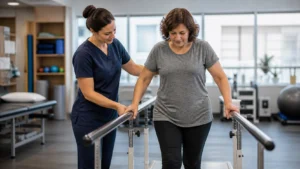
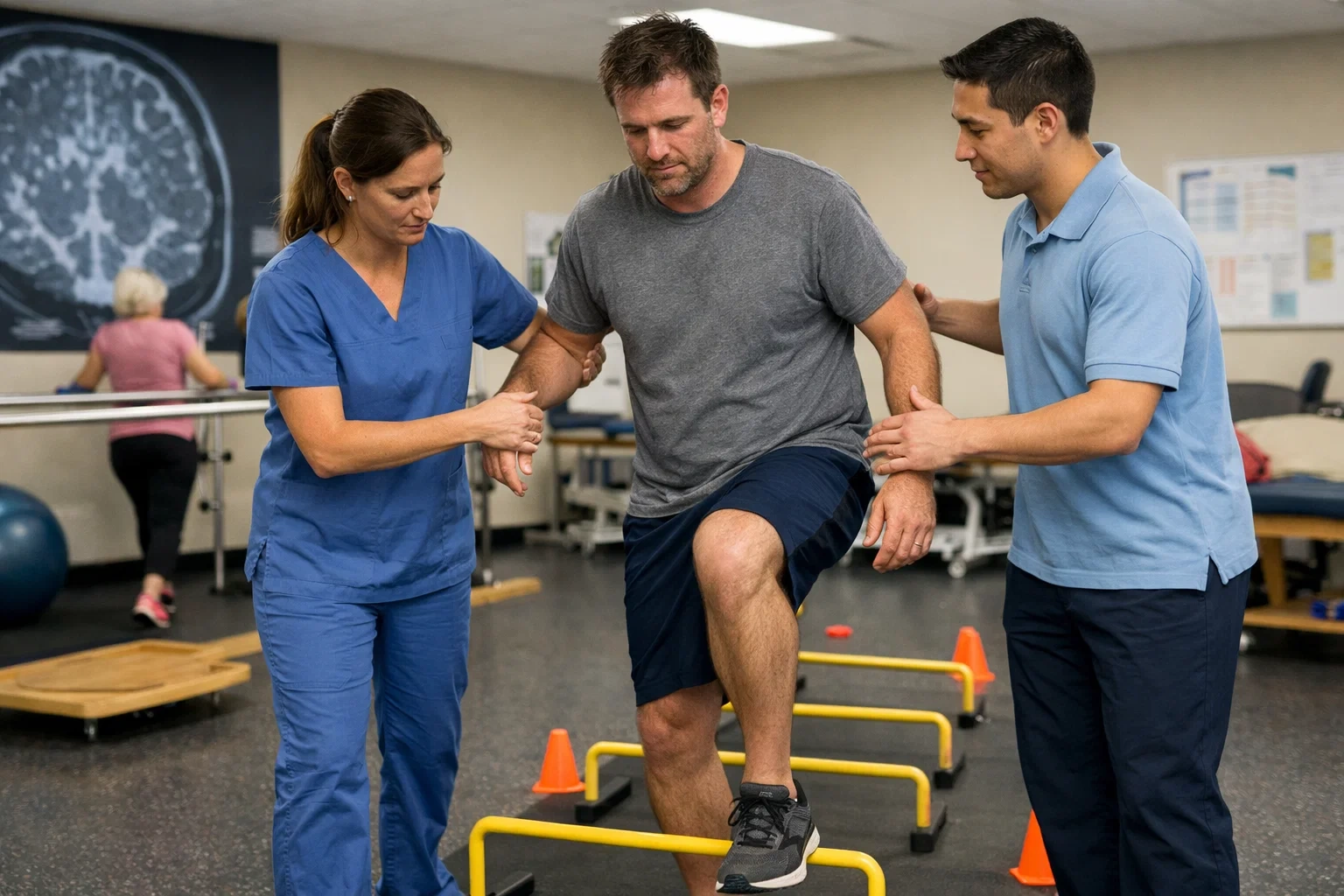
Sessions often focus on practical skills such as walking safely in crowded areas, climbing stairs, managing fatigue, and improving coordination.Recovery can be uneven. Some days feel easier than others. A thoughtful rehabilitation plan respects those fluctuations and adjusts the pace when necessary.
What Life Looks Like After Traumatic Brain Injury Rehabilitation
The goal of therapy is not progress that only happens inside a clinic. It is progress that carries into everyday life.
Rehabilitation after a traumatic brain injury helps patients navigate real environments again. Grocery stores, classrooms, workplaces, and public transit can feel overwhelming for individuals with brain injuries.
For one person, the goal may be tolerating a grocery store again.
For another, it may mean managing school schedules or community events.
This is especially important for individuals with traumatic brain injury and for patients with traumatic brain injury returning to work or school.
Traumatic brain injuries may affect how signals travel within the brain, which can change coordination, attention, and emotional responses.
The goal of traumatic brain injury rehabilitation is to restore daily function while helping people with traumatic brain injury rebuild confidence in their abilities.
A Practical Clinic Experience
Dallas is a busy city. Traffic along US-75 or around NorthPark Center can already be exhausting for someone dealing with brain injuries. Families managing traumatic brain injuries often juggle work schedules, school pickup, and other medical appointments.
OneRehab works to make outpatient rehabilitation accessible for patients across Dallas and Richardson.
Many families prefer clinics with easy parking and simple building access. These details matter for brain injury patients who may still struggle with fatigue or mobility.Our goal is to create a supportive environment where individuals with traumatic brain injuries and their caregivers feel comfortable asking questions and tracking progress.
When It May Be Time To Reach Out
Not everyone contacts a clinic immediately after an injury. Some families hope symptoms will fade with time.
But when challenges continue, the need for rehabilitation becomes clearer.
You may want to reach out if you or your loved one is experiencing:
- ongoing balance problems
- fatigue after short activity
- difficulty focusing
- dizziness or motion sensitivity
- slower reaction times
- frustration with multitasking
- setbacks after hospital discharge
These challenges are common among people with brain injuries and patients with brain injury adjusting to life following acquired brain injury.In many situations, traumatic brain injury rehabilitation can help patients rebuild strength, coordination, and independence through a structured brain injury rehabilitation program.
Start With A Team That Keeps It Clear
You do not need to have every answer before making contact.
You simply need a clinic that understands the realities of living with a brain injury and the long path of injury and recovery.
At OneRehab, our goal is to help patients move forward through compassionate, structured rehabilitation.
If you are in Dallas, Richardson, or nearby DFW communities and need traumatic brain injury rehabilitation, our team is here to guide you through the next step in your recovery journey. Reach out to ask about scheduling, clinic hours, and how our team can support patients with traumatic brain injury and their families during recovery.